

Business Operation · 2025
In this section23 topics
- Corporate Information4 items
- Dividend Policy2 items
- Major Shareholders2 items
- Business Strategies Overview5 items
- Material Changes & Developments1 item
- Use of Proceeds from Securities Offerings1 item
- Commitments Made in the Registration Statement1 item
- Group Operating-Structure Policy1 item
- Companies Where the Company Holds ≥10%1 item
- Shareholders with Potential Conflict of Interest1 item
- Relationships Among Major Shareholders1 item
- Shareholders' Agreement1 item
- Shareholding Diagram (Group Structure)2 items
- Income Structure4 items
- Product / Service Characteristics2 items
- Research & Development6 items
- Assets Used in the Business6 items
- Marketing Policy & Competition3 items
- Procurement of Products & Services8 items
- Nature of Business — Overview1 item
- Projects Under Construction7 items
- Debentures & Bills of Exchange1 item
- Convertible Securities1 item
Corporate Information
Company Name
Asian Marine Services Public Company Limited
Telephone
0-2815-2060-67
Website
www.asimar.com
fid@asimar.com
Dividend Policy
Dividend Policy
Asian Marine Services Public Company Limited : The Company has the policy to pay dividend not less than 40 % of its net profit of each fiscal year after reserving as required by laws and loss carried forward (if any) for dividend payment. However, the actual dividend payment depends on cash flow, investment plan of the Company and its subsidiaries, terms and conditions of the agreements entered by the Company together with all other necessity and suitability in the future.
Historical Dividend Payments
| This Year | Last Year | 2 Years Ago | 3 Years Ago | 4 Years Ago | Metric | Description |
|---|---|---|---|---|---|---|
| 0.2 | 0.19 | 0.08 | 0.04 | 0.09 | Net profit per share (Baht : Share) | Net profit per share (baht : share) |
| 0.12 | 0.12 | 0.08 | 0.04 | 0.1 | Dividend per share (Baht : Share) | Dividend per share (baht : share) |
| 0 | 0 | 0 | 0 | 0 | Dividend stock ratio (Number of original shares: dividend shares) | Ratio of stock dividend payment (existing share : stock dividend) |
| 0 | 0 | 0 | 0 | 0 | Dividend share value per share (Baht : Share) | Value of stock dividend per share (baht : share) |
| 0 | 0 | 0 | 0 | 0 | Total dividend payment value (Baht : Share) | Total dividend payment (baht : share) |
| 61.54 | 63.2 | 95.41 | 100.74 | 113.32 | Dividend payout ratio to net profit (%) | Dividend payout ratio compared to net profit (%) |
Business Strategies Overview
Chairman's Message
Dear Shareholders,
The year 2025 marked another period in which businesses worldwide continued to face uncertainties and multidimensional changes. These challenges stemmed from the uneven recovery of the global economy, prolonged geopolitical conflicts, fluctuations in exchange rates and energy prices, as well as increasing pressures from climate change and the global transition toward a low-carbon society. In such a context, business organizations must remain resilient, forward-looking, and committed to good corporate governance, while upholding social and environmental responsibilities in line with ESG principles.
Despite challenges from elevated operating costs, intensifying industry competition, and constraints in specialized resources and labor, the Company has been able to maintain business stability and achieve its 2025 performance targets. This was made possible through clear strategic direction, prudent management, and adaptive operational planning aligned with the evolving business environment.
In 2025, ship repair services remained the Company’s primary revenue contributor. This segment benefited from the continued recovery of tourism, maritime transportation, and global trade, which led to increased demand for vessel maintenance and repair services. The Surat Thani branch continued to play a significant role, particularly through passenger vessel repairs and specialized projects that enhanced profitability.
In the shipbuilding segment, the Company made steady progress in government projects and recognized revenue in accordance with project milestones as planned. The Company also emphasized the development of efficient, energy-saving, and environmentally friendly shipbuilding technologies. Notably, the Company successfully delivered a prototype multi-purpose vessel in honor of His Majesty King Rama X, as well as an LLDPE (Linear Low-Density Polyethylene) water hyacinth collection vessel with a mesh design to Tha Lan Subdistrict Municipality, Saraburi Province. These achievements reflect the Company’s commitment to sustainable development and long-term value creation for society and the nation.
On behalf of the Board of Directors, the management team, and in my capacity as Chairman of the Board, I would like to express my sincere appreciation to our shareholders, business partners, customers, government agencies, and all stakeholders for your continued trust and support. I also extend my gratitude to our executives and employees for their dedication, hard work, and commitment in driving the organization forward throughout 2025.
The Company remains committed to enhancing operational capabilities, strengthening its business foundation, and conducting business responsibly to ensure stable growth while contributing to long-term economic, social, and environmental sustainability.
Yours sincerely,
Mr.Prakit Pradipasen
Chairman of the Board of Directors
Vision
The Company’s Board of Directors has a firm commitment to executing their duties and responsibilities to the best of their knowledge, capability and experience. Their roles are to formulate policy, and to prescribe the Company’s vision, strategies, targets, corporate mission, business plan and budget, as well as to hold the Management accountable for efficiently implementing policy and managing operations to achieve the set objectives in accordance with company regulations. The Board will review the vision mission and strategy of the company annually. The management reports the strategic performance at the board meeting every quarter.
Vision : To establish ASIMAR as an internationally recognized brand name in the shipbuilding and ship repair industry, through the application of technology in developing its manufacturing process to achieve excellence in quality, timely delivery and ultimate client satisfaction. The company is also driving innovation that supports long-term sustainability by adopting technologies that reduce greenhouse gas emissions and minimize environmental impact. Additionally, it places importance on creating benefits for society and adhering to good corporate governance standards.
Objectives
Commitment to providing a high standard of service to clients by means of effective quality and time control comparable to a leading world-class shipyard, with continuing development and optimal efficiency in the management of company resources for
Clients : Well-received outcomes and complete client satisfaction.
Shareholders : Target returns on investment to their satisfaction.
Employees : Human resources development with opportunities for career advancement and good quality of life.
Environment and Community : Participation in environmental and social development activities.
Goals
The Company operates under a corporate sustainability strategy and continuously develops and improves operational efficiency with an emphasis on maintaining profitability maintaining profitability by improving production processes for safety and cost reduction expanding new products or services to expand the new customer base while creating value and developing the potential of existing customers by controlling quality and delivery times according to leading shipyard standards developing innovations; continuously enhancing the capabilities of personnel to support the Company's growth increasing operational efficiency; reducing environmental impacts and continuing sustainability projects to create sustainable business growth.
Business Strategies
1. Profitability is priority Control costs, increase revenue, generate profit.
2. Sustainable Innovation Sustainable Innovation.
3. Stakeholders Sustainable Plan Stakeholders Sustainable Plan.
4. Partnership for Goal Building partnerships towards the goal.
5. Sustainable Living Caring for Nature and Reducing Environmental Impact
Material Changes & Developments
Material Changes & Developments
| Year | Description |
|---|---|
| 2,024 | Asian Marine Services Public Company Limited February 27, 2024 Held keel-laying ceremony for Hydrographic survey & Buoy Tender vessel by Royal Thai Navy, October 4, 2024 Signed a contract to build Single Conveyor Garbage Collection Boat (HDPE) by Royal Thai Navy valued 10.00 million baht with a timeline of 120 days. Ecomarine Co., Ltd. March 26, 2024 Grand opening of the Interceptor 019 garbage collection vessel, a collaboration between Eco Marine Co., Ltd. and The Ocean Cleanup, a global environmental organization, to install and collect garbage in the Chao Phraya River. July 16, 2024 Signed a contract to build single conveyor trash collector Boat (HDPE) by Precious Shipping Public Company Limited. valued 3.19 million baht with a timeline of 150 days. August 21, 2024 Held keel-laying ceremony for single conveyor trash collector Boat (HDPE) by Precious Shipping Public Company Limited. November 19, 2024 Complete delivery of single conveyor trash collector Boat (HDPE) project to Precious Shipping Public Company Limited. Used to collect garbage in the canals of Bangkok. Future Power Solutions Co., Ltd.October 18, 2024 |
| 2,023 | Asian Marine Services Public Company Limited January 25, 2023 Held ceremony to launch a Tugboat (HTMS TACHAI) commissioned by Royal Thai Navy. Royal Thai Navy. April 28, 2023 Completed delivery of the project install the drive system Azimuth Thruster of TARUA 119, valued 85.07 million baht. August 21, 2023 Completed delivery of the Tugboat (HTMS TACHAI) for the Royal Thai Navy at Laem Thian Port Sattahip Port Authority, Sattahip District, Chonburi Province, value 284.62 million baht. September 22, 2023 Signed a contract to build Hydrographic survey & Buoy Tender vessel by Royal Thai Navy, valued 885.00 million baht with a timeline of 760 days. Ecomarine Co., Ltd. June 27, 2023 Signed a contract for the construction of 1 water hyacinth and weed harvester boat for the Royal Irrigation Department, Nakhon Si Thammarat Province. The project duration is 135 days with a contract value of 9.49 million baht. November 6, 2023 Complete delivery ecological boat to harvest water hyacinth and other unwanted marine flora commissioned by Royal Irrigation Department, Nakhon Si Thammarat Province. December 22, 2023 Held ceremony to launch the garbage collection boat Interceptor 019 into the water, which is a collaboration between Eco Marine Company Limited and The Ocean Cleanup, a global environmental organization. To install and store garbage in the Chao Phraya River. Future Power Solution Co., Ltd. Completed delivery engine maintenance contract Mae Haad boat of Lomprayah high speed ferries co.,ltd. valued 14.98 million baht |
| 2,022 | Asian Marine Services Public Company Limited March 3, 2022 Complete delivery adjustment Thai customs patrol boat 1201 it is museum patrol boat at pier Thai customs Koh Sri-chang October 19, 2022 Sign the contract with Port Authority of Thailand to purchase and install the drive system Azimuth Thruster of TARUA 119 valued 85.07 million baht with a timeline 180 Days. Ecomarine Co., Ltd. February 2, 2022 Complete delivery ecological boat to harvest water hyacinth and other unwanted marine flora commissioned by Lamphun Provincial Administrative Organization. March 31, 2022 Sign MOU with The Ocean Cleanup supporting the operation of the automated waste collection vessel “Interceptor” it is to collect plastic waste in the Chao Phraya River and reduce the problem of waste flowing into the sea. Future Power Solution Co., Ltd. May 12, 2022 Changed the name from General Marine Co., Ltd. to Future Power Solutions Co., Ltd. October 17, 2022 Sign engine maintenance contract Mae Haad boat of Lomprayah high speed ferries co., ltd |
| 1,981 | Asian Marine Services Co., Ltd. Asian Marine Services Public Company Limited was established in 1981 as a marine survey company with registered capital of THB 200,000. The Company later reviewed its original corporate objective in view of the growing demand for ship repair services of required standard. In response to such demand, the Company increased its registered capital to THB 20 million and purchased its first floating dock, Asimar 1, from Japan. |
| 1,995 | Asian Marine Services Public Company Limited The Company purchased its second floating dock, Asimar 2, from Germany and increased the registered capital to THB 120 million and THB 170 million respectively. The Company subsequently became listed as a public company limited and changed its name to Asian Marine Services Public Company Limited or ASIMAR. |
| 1,996 | Asian Marine Services Public Company Limited The company was awarded a government procurement contract to build 3 patrol gunboats for the Royal Thai Navy worth THB 808 million. Moreover, the Company’s ordinary shares were approved as registered share capital for trading in the Stock Exchange of Thailand. The Company later registered the closing of its branch at Soi Suksawad 49 and moved the Asimar 1 floating dock to the same location as Asimar 2 at the Company’s current headquarters. |
| 2,000 | Asian Marine Services Public Company Limited The company was awarded the ISO 9001 version 2000 certification from Lloyd’s Register Quality Assurance. |
| 2,002 | Asian Marine Services Public Company Limited the Company was commissioned to build 2 vessels: the semi-submersible Pattaya Prakarang vessel and the Catamaran Passenger Ferry, at the total amount of THB 50 million. The Company was also awarded a contract by the Royal Thai Police to repair and renovate 3 of its large patrol gunboats at the total amount of THB 256 million. In addition, the Company also increased registered share capital of THB 119 million through the issuing 3-year warrants to existing shareholders for a total of 119 million units |
| 2,003 | Asian Marine Services Public Company Limited the Company was appointed to construct parts of the steel structure and fabrication linking the Concourse Building of Suvarnabhumi Airport for a total amount of THB 159 million and replaced Asimar 1 with a new floating dock worth THB 30 million. |
| 2,004 | Asian Marine Services Public Company Limited The company established a subsidiary, Asimar Marine Co., Ltd., as an in-house sub-contractor to manage skilled-specific works. This year, the company was able to win contracts to repair the Chulabhorn, a vessel belonging to the Department of Fisheries, at THB 42 million; the Naval Dockyard Department’s Soopairin ship worth THB 28.5 million; and the KALAMINJA MT401 vessel from the Maldives worth THB 42 million. |
| 2,005 | Asian Marine Services Public Company Limited The Company entered a joint venture with GLOBECO S.P.A. of Italy, one of the world’s leading companies in waterway waste-management, to establish Ecomarine Co., Ltd. (Subsidiary) whose major business focuses on providing pollution and waste disposal services in waterways such as water hyacinth, garbage and oil spills, etc. to both public and private sector clients in Thailand and in Asia. The Company builds the vessels used in providing these services. |
| 2,006 | Asian Marine Services Public Company Limited The Company jointly signed a contract with GATI LIMITED of India worth USD13.4 million to build a 442 TEU cargo ship and has allocated additional budget for the procurement of various machinery and improvement of its plant area in order to develop and increase its potential in the shipbuilding industry to better respond to demands in the domestic and international markets. May 2006 A total of 50,670,344 units of warrants were exercised for the 13th (and last) time, bringing the Company’s paid capital to THB 234,810,100 from THB 184,139,756, with the number of expired warrants remaining at 3,189,900 share units at the price of THB 1 per share. May 9, 2006 The Company revised its registered capital in accordance with the resolution of the 2006 Annual General Shareholders’ Meeting which noted that upon the expiry date of the warrants, there remained 3,189,900 share units still unexercised which made it necessary for the Company to amend its paid capital registration from THB 238,000,000 to THB 234,810,100 which should also be reflected in Article 4 of the Company’s prospectus under the heading “Registered Capital”. Ecomarine Co., Ltd. Purchased the Pelican 25 vessel from Italy to provide services in garbage collection and oil film disposal, as well as building 3 waste management vessels. Ecomarine was contracted by the Provincial Administration Organization of Samutprakan and from Tambon Theparak Administration Organization in 2006 to dispose of water hyacinth in the area in front of the Samrong Canal water gate. |
| 2,007 | Asian Marine Services Public Company Limited The company completed building the structure of a 442 TEU cargo ship—the largest ever to be commissioned in Thailand, for GATI LIMITED of India, which commenced in 2006 and is due to be delivered in 2008. In addition the Company also signed another two contracts: with SERBA PACIFIK SDN.BHD of Malaysia to convert a container ship into an offshore operations support vessel; and with ALMANSOORI PRODUCTION SERVICE LLC. of the United Arab Emirates to build a petroleum exploration vessel. The Company has started an occupational health and safety standards program and OHSAS 18001accreditation system which is currently being developed in accordance with the established guidelines. Asimar Marine Co., Ltd. January 26, 2007 Proceeded to decrease its registered capital on 26 January 2007 from the total registered capital of THB 37.5 million to THB 10.0 million and again on 3 August 2007 from THB 10.0 million to THB 5.0 million. Ecomarine Co., Ltd. Was contracted by the Provincial Administration Organization of Ayudhaya Province to rehabilitate the waterways of the Chao Phraya River in the province which has been badly polluted and negatively impacting on fish farming. The project is called “A Bright Chao Phraya in Honour of His Majesty the King” and involves inspection and treatment of the waterways as the river runs through Ayudhaya Province, including disposal of waste, water hyacinth and other pests. The contract signage took place on 30 November 2007 and the project commenced on 1 December 2007 and is due to finish on 31 November 2008. |
| 2,008 | Asian Marine Services Public Company Limited The Company completed the project to build a 442 TEU cargo ship commissioned by GATI LIMITED of India. Prior to that, on 26 November 2008, the Company delivered the offshore operations support vessel—converted from a container transport ship; commissioned by SERBA PACIFIK SDN.BHD of Malaysia and proceeded with the project commissioned by ALMANSOORI PRODUCTION SERVICE LLC. of the United Arab Emirates to build a petroleum exploration vessel which is due to be delivered in 2009. In addition, the Company signed a contract with K.A. AL-GOSAIBI DIVING AND MARINE SERVICES COMPANY of Saudi Arabia to build a 60-metre offshore submarine operations support vessel. The Company has proceeded in developing its occupational health and safety standards program under the OHSAS 18001 accreditation system in accordance with the guidelines and requirements of the system Ecomarine Co., Ltd. Has completed the rehabilitation of the waterways of the Chao Phraya River and Noi River in Ayudhya Province, under the Bright Chao Phraya in Honour of His Majesty the King Project which involved inspection and treatment of the waterways which run through the province, including disposal of waste, water hyacinth and other weeds. Project implementation of the one-year contract began on 1 December 2007 and ended on 31 November 2008. Organic materials were used in the treatment and rehabilitation process because water in the area earlier faced serious pollution and contamination problems which adversely affected the local fish farming industry. |
| 2,009 | Asian Marine Services Public Company Limited January 12, 2009 The Company delivered a 442 TEU cargo ship to GATI Limited of India. March 2, 2009 The Company released an off-shore oil rig operations support vessel of ALMANSOORI PRODUCTION SERVICE LLC. from the United Arab Emirates and held a hand-over ceremony on 26 October 2009. March 30, 2009 The Company laid down the keel for a 60-metre offshore operations support vessel commissioned by K.A.AL-GOSAIBI DIVING AND MARINE SERVICES COMPANY OF Saudi Arabia. September 28, 2009 The Company signed a contract with the Fisheries Department to repair the Mahidol Marine Exploration Ship. November 30, 2009 The Company signed a contract with the Ports Authority of Thailand to build 2 tow vessels, valued at 533 million Baht (price including VAT), of not less than 30 metric tonnes and not less than 40 metric tonnes tow capacity respectively. The project timeline is 730 days. |
| 2,010 | Asian Marine Services Public Company Limited March 17, 2010 The company delivered the Mahidol Marine Exploration Vessel to the Department of Fisheries following completion of major repairs which took 6 months. April 1, 2010 The company laid the keel for two tow vessels, of not less than 30 metric tonnes and not less than 40 metric tonnes tow capacity respectively, commissioned by the Ports Authority of Thailand. March The company proceeded with expansion of the ASIMAR 1 floating dock to 3,951 tonne gross to accommodate vessels of up to 5,000 DWT which will enable the company to repair larger vessels and increase revenue. The company also initiated an Innovation research and development project focusing on mitigating pollution from usage of raw materials, including modification of tools, equipment, production processes and energy consumption to further lessen environmental impacts on nearby communities and protect the environment as a whole. Ecomarine Co., Ltd. Implemented the Chao Phraya/Pasak Rehabilitation Project in Ayudhya, Pathumthani and Nonthaburi provinces for seven months which focused on activities such as collection and eradication of water hyacinths, garbage, and other waste and pollution, including monitoring of the water quality in the Chao Phraya River. |
| 2,011 | Asian Marine Services Public Company Limited June 23, 2011 Signed a contract to build the Transhipment Barge Inter 7 vessel for Inter Stevedoring 7 Co., Ltd., valued at 70 million Baht with a timeline of 240 days. July 18, 2011 The company laid the keel for Transhipment Barge Inter 7. July 21, 2011 The company signed a contract to modify the Transhipment Barge, Pornpiyacharn 2 for Pornpiya Charn Transport Co., Ltd., valued at 23.25 million Baht with a timeline of 120 days. August 8, 2011 The company won a contract from Best Performance Engineering Co., Ltd. to repair the crude tanker Benchamas Explorer for Chevron Thailand Exploration and Production Ltd. October 15, 2011 The company signed a contract with Chevron Thailand Exploration and Production Ltd. and Chevron Offshore Thailand Limited to conduct a typhoon evacuation project for ports and transport docks in case of emergency November 21, 2011 The company was commissioned by Titan Maritime of Singapore to salvage the Unison Vigor, its cargo ship which had capsized off the Kerry Siam Seaport in Sriracha District of Chonburi Province. December 22, 2011 The company launched the two tow vessels with static bollard pull of not less than 30 metric tonnes and not less than 40 metric tonnes respectively commissioned by the Ports Authority of Thailand. Ecomarine Co., Ltd. February 3, 2011 The company affected a capital decrease whereby the share value was reduced from 100 Baht per share to 25 Baht per share. March 18, 2011 The company registered a capital increase from 6.25 million Baht to 18.25 million Baht by issuing 480,000 ordinary shares at 25 Baht per share amounting to 12.0 million Baht which was not of interest to GLOBECO S.p.A., resulting in a change in the shareholding structure with Asian Marine Services PLC gaining 93.15% while GLOBECO S.p.A. retained 6.85%. March 2011 The company successfully delivered the Chao Phraya/Pasak Rehabilitation Project in Ayudhya, Pathumthani and Nonthaburi provinces which focused on activities such as collection and eradication of water hyacinths, garbage, and other waste and pollution, including monitoring of the water quality in the Chao Phraya River. November 4-6, 2011 Ecomarine Co., Ltd. was entrusted by the Armed Forces Development Command’s Region 5 to undertake urgent development activities in the area of Hokwa Canal, Lumlookka District of Pathumthani Province by providing vessels to dredge the canal and dispose of garbage, sludge and other water pollutants including water hyacinth between 4 to 6 November 2011 in order to clear up the waterways so that flood water could be drained from the area hard hit by the flooding crisis. The project value was 130,000 Baht. |
| 2,012 | Asian Marine Services Public Company Limited July 4, 2012 Signed a contract to build 2 Lighter Barge vessels for Talay Thai Transportation 2 Co. Ltd., valued at 35.70 million Baht with a timeline of 5 months. July 31, 2012 Handed over the Transhipment Barge Inter 7 vessel for Inter Stevedoring 7 Co., Ltd. and laid the keel for 2 Lighter Barge vessels for Talay Thai Transportation 2 Co. Ltd. December 2012 Received OHSAS 18001 Version 2007 accreditation from Lloyd’s Register Quality Assurance. Ecomarine Co., Ltd. May 14, 2012 Was commissioned by the Office of the Permanent Secretary, Ministry of Science and Technology to dredge the Ban Mai Canal and the Naikimsai 1 trench, valued at 1,841,000 Baht and 197,800 Baht respectively. August 18, 2012 Was commissioned by the Faculty of Science, Chulalongkorn University to dredge up the slush in its water pool, valued at 300,000 Baht. |
| 2,013 | Asian Marine Services Public Company Limited January 15, 2013 Signed a contract to build 6 Lighter Barges for Ang Thong Sugar Terminal Co., Ltd. with a project duration of 1 year, worth 93.17 million baht. April 11, 2013 Delivery of Lighter Barge No. 1 and 2 of Ang Thong Sugar Terminal Co., Ltd. November 15, 2013 Delivery of Lighter Barge No. 3 and 4 of Ang Thong Sugar Terminal Co., Ltd. December 16, 2013 Delivery of the Offshore Subsea Support Vessel (ADAMS NOMAD) of K.A.AL-GOSAIBI DIVING AND MARINE SERVICES COMPANY from the Kingdom of Saudi Arabia Ecomarine Co., Ltd. On 16 June 2013, signed a contract to channel dephth modification work at GLOW SPP3'S coal harbor for Glow SPP3 Co. Ltd., valued at 32.49 million Baht with a timeline on 21 June 2013 and ended on 9 November 2013. Commissioned by the Electricity Generating Authority of Thailand (Maemoh) to shipbuilding Air Boat vessel, valued at 695,000 Baht with a timeline on 24 August 2013 and ended on 26 November 2013. |
| 2,014 | Asian Marine Services Public Company Limited February 17, 2014 Signed a contract to build 1 Tugboat vessels for Port Authority of Sihanoukville valued USD 6.30 million with a timeline of 18 month. March 12, 2014 Signed a contract to build 1 for 12 MT BUOY TENDER vessels for Port Authority of Thailand valued 349.60 million Baht with a timeline of 15 month. Ecomarine Co., Ltd. Commissioned by the Department of Public Works and Town& Country Planning to Repair of hydraulic systems and marine propulsion systems, water hyacinth removal 12 vessels valued 5.91 million Baht. with a timeline on 27 February 2014 and ended on 24 October 2014. |
| 2,015 | Asian Marine Services Public Company Limited August 4, 2015 Delivered the Tug boat to Port Authority of Sihanoukville valued USD 6.30 million. August 7, 2015 The company launched the 12 MT BUOY TENDER vessel of Port Authority of Thailand. August 17, 2015 Commissing Ceremony at Port Authority of Sihanoukville, Cambodia. September 3, 2015 Delivered the 12 MT BUOY TENDER vessel to Port Authority of Thailand valued 349.60 million Baht. September 26, 2015 Received the Award of “Premium Products of Thailand Year 2015” under the category of standard shipbuilding of Sea Vessels from Ministry of Industry Thailand. Ecomarine Co., Ltd. February 5, 2015 Signed a contract of 4 paddle wheel vessels at Department of Public Works and Town & Country Planning for the period of 241 days valued at 45.90 million Baht. August 21, 2015 Delivered 4 paddle wheel vessels of Department of Public Works and Town & Country Planning valued at 45.90 million Baht December 30, 2015 Signed a contract of 3 paddle wheel vessels at Department of Public Works and Town & Country Planning for the period of 8 months valued at 37.48 million Baht. General Marine Co., Ltd. December 21, 2015 Has changed its company name from the title company, General Warehousing Co., LTD to General Marine Co., LTD and objectives for the business as a distributor of agricultural equipment. Operating as a distributor of machinery, spare parts and equipment. |
| 2,016 | Asian Marine Services Public Company Limited May 4, 2016 Signed contract to build a Tugboat with pulling capacity of not less than 50 metric tons for the Ports Authority of Thailand, with project timeline of 18 months and project value of 398.30 million Baht. July 27, 2016 Transfer ownership of property comprising land and building in Surat Thani Province as additional branch to expand business operation to the southern region, at total value of 130 million Baht August 26, 2016 Signed a contract to build 6 barges A2500 DWT for Viravan Co., Ltd. with project timeline of 1 year and project value of 99.00 million Baht. September 6, 2016 Keel-laying Ceremony of the Tugboat with pulling capacity of not less than 50 metric tons commissioned by the Ports Authority of Thailand September 28, 2016 Keel-laying Ceremony of the VC 23 and VC 24 barges A2500 DWT commissioned by Viravan Co., Ltd. December 29, 2016 Keel-laying Ceremony of the VC 25 and VC 26 barges A2500 DWT commissioned by Viravan Co., Ltd. Ecomarine Co., Ltd. March 29, 2016 Signed a contract to build an ecological boat to harvest water hyacinth and other unwanted marine flora commissioned by the Department of Public Works and Town Planning, Nakhon Pathom Province, with project timeline of 240 days and project value of 13.90 million Baht. April 28, 2016 Signed a contract to build an ecological boat to harvest water hyacinth and other unwanted marine flora commissioned by the Chachoengsao Provincial Administration Organization, with project timeline of 180 days and project value of 9.94 million Baht. June 14, 2016 Completed delivery of 3 ecological boats to harvest water hyacinth and other unwanted marine flora commissioned by the Department of Public Works and Town Planning at total value of 37.84 million Baht. September 15, 2016 Completed delivery an ecological boat to harvest water hyacinth and other unwanted marine flora commissioned by the Department of Public Works and Town Planning, Nakhon Pathom Province at total value of 13.90 million Baht. September 19, 2016 Completed delivery of an ecological boat to harvest water hyacinth and other unwanted marine flora commissioned by the Chachoengsao Provincial Administration Organization, at total value of 9.94 million Baht October 3, 2016 Completed delivery of a major repair and refitting project of 15 ecological boats to harvest water hyacinth and other unwanted marine flora commissioned by the Department of Public Works and Town Planning, Bangkok at total value of 25.40 million Baht. |
| 2,017 | Asian Marine Services Public Company Limited January 19, 2017 Completed the delivery of the 1st batch of VC 23 and VC 24 barges A2500 DWT commissioned by Viravan Co., Ltd. and had the keel-laying ceremony for the 3rd batch of VC 27 and VC 28 barges. April 8, 2017 Held the delivery ceremony for the 2nd batch of VC 25 and VC 26 barges A2500 DWT commissioned by Viravan Co., Ltd. May 8, 2017 Signed a contract to complete the assembly and installation of fencing along the Special Inter-city Highway between Bang Pa-In – Saraburi – Nakhon Ratchasima at the level crossing (Section 7) with Italian-Thai Development PLC at a total value of THB 10.70 million and a project timeline of 17 months. August 31, 2017 Completed the delivery of the 3rd batch of VC 27 and VC 28 barges A2500 DWT commissioned by Viravan Co., Ltd. September 28, 2017 Held ceremony to launch a Tugboat with pulling capacity of 50 metric tons (the Port Boat 304) commissioned by the Port Authority of Thailand. October 24, 2017 Completed delivery of the Tugboat with pulling capacity of 50 metric tons (the Port Boat 304) commissioned by the Port Authority of Thailand valued at THB 398.30 million. Ecomarine Co., Ltd. April 25, 2017 Signed a contract to build 2 ecological boats to harvest water hyacinth and other unwanted marine flora equipped with chopping device commissioned by the Department of Public Works and Town Planning of Sakon Nakhon Province at total value of THB 20.57 million and a project timeline of 180 days. June 14, 2017 Held keel-laying ceremony for 2 ecological boats to harvest water hyacinth and other unwanted marine flora commissioned by the Department of Public Works and Town Planning of Sakon Nakhon Province. October 23, 2017 Completed delivery of 2 ecologicalo boats to harvest water hyacinth and other unwanted marine flora with 60 ton/hour capacity and equipped with chopping device commissioned by the Department of Public Works and Town Planning of Sakon Nakhon Province. |
| 2,018 | Asian Marine Services Public Company Limited January 9, 2018 Signed a contract to build a Ferry vessel for the Seatran Ferry Co., Ltd. valued 168.12 Million Baht. January 25, 2018 Signed a contract to Subcontractor for Steel structure of the New Sadao Customs house building, Songkla. with Power Line Engineering PCL. At a total value of 27.63 Million Bath. July 6, 2018 Signed a contract to Subcontractor for the installation of steel structure for Suvarnabhumi airport expansion CC1/2 project.with China State Construction Engineering (Thailand) Co.,Ltd. at a total value of 35.59 Million Baht. and a project timeline of 9 months. Ecomarine Co., Ltd. January 19, 2018 Signed a contract to build an ecological boats to harvest water hyacinth and other unwanted marine flora commissioned by the Department of Public Works and Town Planning of Sakon Nakhon Province at total value of 6.70 Million Baht and a project timeline of 180 days. February 12, 2018 Signed a contract to build 3 ecological boats to harvest water hyacinth and other unwanted marine flora commissioned by the Department of Public Works and Town Planning of Bangkok at total value of 25.30 Million Baht and a project timeline of 240 days. February 28, 2018 Held keel-laying ceremony for 4 ecological boats to harvest water hyacinth and other unwanted marine flora commissioned by the Department of Public Works and Town Planning of Sakon Nakhon Province. and by the Department of Public Works and Town Planning of Bangkok. July 19, 2018 Completed delivery of a ecological boats to harvest water hyacinth and other unwanted marine flora commissioned by the Department of Public Works and Town Planning of Sakon Nakhon Province. On September - October 2018 Completed delivery of 4 ecological boats to harvest water hyacinth and other unwanted marine flora commissioned by the Department of Public Works and Town Planning of Bangkok. |
| 2,019 | Asian Marine Services Public Company Limited February 26, 2019 Signed a contract a build Canal Cleaning Boat by the Toyota Motor Thailand Co., Ltd. At total value of 5.80 Million Bath and project timeline of 135 days. April 30, 2019 Signed a contract to build 4 Catamaran Passenger Boats by the Chao Phraya Express Boat Co., Ltd. At total value of 58.20 Million Bath and a project timeline of 140 days. May 23, 2019 Completed delivery for steel structure of the New Sadao Customs house building, Songkla. with Power Line Engineering PCL. August 9, 2019 Completed delivered the canal cleaning Boat to Toyota Motor Thailand Co., Ltd. August 25, 2019 Held Keel-laying ceremony for 4 Catamaran Passenger Boats by the Chao Phraya Express Boat Co., Ltd. Ecomarine Co., Ltd. August 14, 2019 Signed a contract build 2 ecological boats to harvest water hyacinth and other unwanted marine flora commissioned by the Department of public Works and Town planning of Bangkok at the total value of 15.65 Million Baht and a project timeline of 240 days. September 11, 2019 Signed a contract to build 2 ecological boat to harvest water hyacinth and other unwanted marine flora commissioned by the Chiang Mai Provincial Administrative Organization at total value of 6.99 Million Baht and a project timeline of 90 days. September 17, 2019 Held keel-laying ceremony for an ecological boat to harvest water hyacinth and other unwanted marine flora commissioned by the Chiang Mai Provincial Administrative Organization. October 17, 2019 Held Keel-laying ceremony for 2 ecological boats to harvest water hyacinth and other unwanted marine flora commissioned by the Department of public Works and Town Planning of Bangkok. November 29, 2019 Signed a contract to supply 1 six-wheeled aerial work platform to Khlong Tamru Municipality. Project value: 3.89 million baht. December 9, 2019 Completed delivery an ecological boat to harvest water hyacinth and other unwanted marine flora commissioned by the Chiang Mai Provincial Administrative Organization. |
| 2,020 | Asian Marine Services Public Company Limited March 9, 2020 Signed a contract to build 5 Electric Passenger Boats for Mine Mobility Research Co., Ltd. valued at 66.57 million Bath. March 11, 2020 Complete delivery of 4 Catamaran Passenger Boats by the Chao Phraya Express Boat Co.,Ltd May 29, 2020 Signed a contract build 2 unit a length of not less than 35 feet canal cleaning Boat for department of Marine and Coastal Resources, valued at 42.58 million Bath with a timeline of 180 days. July 30, 2020 Held keel-laying ceremony for A length of not less than 35 feet Canal Cleaning Boat 2 vessel for Department of Marine and Coastal Resources. September 30, 2020 Completed delivery of an ecological boat to harvest water hyacinth and other unwanted marine flora commissioned by the Ecomarine Co., Ltd. Ecomarine Co., Ltd. April 10, 2020 Completed delivery of 2 ecological boat to harvest water hyacinth and other unwanted marine flora commissioned by the Department of Public Works and Town Planning. May 28, 2020 Signed a contract to build 2 ecological boats to harvest water hyacinth and other unwanted marine flora commissioned install a crane with a compactor by Department of Public Works and Town Planning, valued 27.18 million Bath with timeline of 350 days. October 15, 2020 Held keel-laying ceremony for 2 ecological boats to harvest water hyacinth and other unwanted marine flora commissioned install a crane with a compactor by Department of Public Works and Town Planning. November 11, 2020 Signed a contract to build ecological boats to harvest water hyacinth and other unwanted marine flora commissioned install a crane with a compactor 5 vessel by Department of Public Works and Town Planning, valued 46.00 million Bath with timeline of 340 days. |
| 2,021 | Asian Marine Services Public Company Limited February 25, 2021 Complete delivery of 2 vessels a length of not less than 35 feet Canal Cleaning Boat by Department of marine and Coastal Resourced. May 25, 2021 Signed a contract to build Tug Boat by Royal Thai Navy, valued 248.62 million Baht with a timeline of 540 days. September 13, 2021 Held keel-laying ceremony for Tug Boat for Royal Thai Navy. On November 2021, Complete delivery of 5 vessels Electric Passenger Boats by Mine Mobility Research Co.,Ltd Ecomarine Co., Ltd. March 29, 2021 Complete delivery of ecological boat to harvest water hyacinth and other unwanted marine flora commissioned by Department of Public Works and town Planning Suphanburi Province. May 12, 2021 Complete delivery of ecological boat to harvest water hyacinth and other unwanted marine flora commissioned by Department of Public Works and town Planning Ratchaburi Province. September 17, 2021 Complete delivery of 5 ecological boat to harvest water hyacinth and other unwanted marine flora commissioned by Department of Public Works and town Planning at Tha Chin River Suphanburi Province. October 18, 2021 Signed a contract to build ecological boat to harvest water hyacinth and other unwanted marine flora commissioned by Lamphun Provincial Administrative Organization, valued 6.89 million Baht with a timeline of 120 days. November 11, 2021 Held keel-laying ceremony for ecological boat to harvest water hyacinth and other unwanted marine flora commissioned by Lamphun Provincial Administrative Organization. |
| 2,025 | Asian Marine Services Public Company Limited February 28, 2025 April 24, 2025 May 19, 2025 June 19, 2025 November 21, 2025 Eco Marine Co., Ltd.August 18, 2025 Future Power Solutions Co., Ltd.May 9, 2025 |
Use of Proceeds from Securities Offerings
Is There Money Raised from a Securities Offering Still to Report On?
No
Commitments Made in the Registration Statement
Are There Commitments or Conditions from an Offering or Listing?
No
Group Operating-Structure Policy
Description
The company has a policy of dividing its business operations into groups based on business types and product characteristics, where each business group will support and relate to each other.
Companies Where the Company Holds ≥10%
Companies (≥10% Holding)
| Company Name | Address | Province | Zip Code | Telephone | Business Type | Security Type | Shares | Paid-up Shares |
|---|---|---|---|---|---|---|---|---|
| Future Power Solution Co.,Ltd. | 128 Moo 3, Suk Sawat Road, Laem Fa Pha, Phra Samut Chedi | Samut Prakarn | 10290 | 02-815-2060 | Conducting business as a distributor of machinery, machinery, generators spare parts and related equipment both inside and outside the country | Common shares | 249,940 | 250,000 |
| Ecomarine Co.,Ltd. | 128 Moo 3, Suk Sawat Road, Laem Fa Pha, Phra Samut Chedi | Samut Prakarn | 10290 | 02-815-2060 | Water pollution control services | Common shares | 679,993 | 730,000 |
| Asimar Marine Co., Ltd. | 128 Moo 3, Suk Sawat Road, Laem Fa Pha, Phra Samut Chedi | Samut Prakarn | 10290 | 02-815-2060 | Builder of aluminum boats | Common shares | 99,964 | 100,000 |
Income Structure
Introduction
The consolidated revenue structure of Asian Marine Services Public Company Limited, its subsidiaries are as follows:
Product / Service Income
| Category | Description | This Year | This Year % | Last Year | Last Year % | 2 Years Ago | 2 Years Ago % |
|---|---|---|---|---|---|---|---|
| Total revenue from operations | Total revenue from operations | 936,637 | 100 | 1,054,783 | 100 | 573,604 | 100 |
| Ship repair | 523,801 | 55.92 | 500,429 | 47.44 | 493,707 | 86.07 | |
| Ship building | 325,368 | 34.74 | 503,088 | 47.7 | 20,761 | 3.62 | |
| Ship supply | 1,121 | 0.12 | 4,100 | 0.39 | 8,870 | 1.55 | |
| Subsidiary company income | 70,118 | 7.49 | 33,674 | 3.19 | 31,459 | 5.48 | |
| Other | Others | 16,229 | 1.73 | 13,492 | 1.28 | 18,806 | 3.28 |
Export Income
| Category | Description | This Year | This Year % | Last Year | Last Year % | 2 Years Ago | 2 Years Ago % |
|---|---|---|---|---|---|---|---|
| Total revenue | Total revenue | 936,637 | 100 | 1,054,783 | 100 | 573,604 | 100 |
| Domestic | Domestic | 895,477 | 95.61 | 1,047,534.59 | 99.31 | 555,197.71 | 96.79 |
| International | International | 41,160 | 4.39 | 7,248.41 | 0.69 | 18,406.29 | 3.21 |
Other Income
| Operating Other Income | Non-Operating Other Income | Share of Profit |
|---|---|---|
| 1710 · As of year: 16229.0 · Description: Total other income · As of yesteryear: 13554.76 · As of year before yesteryear: 18806.42 · 1711 · As of year: 0.0 · Description: Other income from operations · As of yesteryear: 0.0 · As of year before yesteryear: 0.0 | 1712 · As of year: 16229.0 · Description: Other income not from operations · As of yesteryear: 13554.76 · As of year before yesteryear: 18806.42 | 1713 · As of year: 119.51 · Description: Share of profit · As of yesteryear: 200.8 · As of year before yesteryear: 138.65 |
Product / Service Characteristics
Business Type
3114
Business Groups
| Business Group | Description | ||||||||||||||||||||||||||||||||||||||||||||||||||||||||||||||||||||||||||||||
|---|---|---|---|---|---|---|---|---|---|---|---|---|---|---|---|---|---|---|---|---|---|---|---|---|---|---|---|---|---|---|---|---|---|---|---|---|---|---|---|---|---|---|---|---|---|---|---|---|---|---|---|---|---|---|---|---|---|---|---|---|---|---|---|---|---|---|---|---|---|---|---|---|---|---|---|---|---|---|---|
| Ship Repair | The Company is equipped with major facilities for ship repair with the size of vessels ranging from 5,000 DWT. to 20,000 DWT. These facilities are two U Groove floating docks, to serve both domestic and international demands, together with other supporting facilities e.g. warehouse, giant cranes, and high-killed workforces capable of producing high standard outputs. | ||||||||||||||||||||||||||||||||||||||||||||||||||||||||||||||||||||||||||||||
| Shipbuilding | The Company has slipways, equipment and machinery to accommodate large ship handling systems with operational capacity to build ships of up to 120 metres in length and up to 20,000 DWT. To date, the Company has been entrusted by clients –both in Thailand and from overseas, to build such versatile and specialized vessels.
| ||||||||||||||||||||||||||||||||||||||||||||||||||||||||||||||||||||||||||||||
| Conversion Projects | The Company has the expertise in ship conversion which require specialized experience and technical knowledge, for example conversion of oil tankers into Double Hull vessels, cold storage vessels, patrol boats, or conversion of conventional bulk carriers into container ships, as well as hull expansion works and support vessels as accommodation at oil rig locations. | ||||||||||||||||||||||||||||||||||||||||||||||||||||||||||||||||||||||||||||||
| Engineering Work | The Company is also capable of fabricating and repairing afloat and offshore constructions, steel work structures for bridges, heavy industries, oil rigs as well as factory components. |
Research & Development
Has R&D Policy (Y/N)
Yes
Introduction
The Company places significant importance on creativity, the development of new inventions, and the application of existing technologies to enhance operational processes. The objective is to create business advantages, strengthen long-term competitiveness, provide timely solutions to customers, and deliver value to stakeholders. The Company has established an Innovation Working Committee and provides support in terms of budget and knowledge resources. In addition, the Company has implemented the KAIZEN AWARDS program and incorporated innovation-related targets into employees’ annual KPIs to further develop innovative ideas or new inventions. These include improvements in work processes that reduce operational costs in terms of time, manpower, and expenses, value creation initiatives, as well as the development of new products that can be expanded into commercial products and potentially evolve into Business Model Innovation.
The Company also conducts innovation research by applying modern technologies to improve operational efficiency, reduce energy consumption, and enhance environmental responsibility. The Company actively supports the advancement of E-mobility, which plays a crucial role in achieving Thailand’s climate goals. The Company has constructed and delivered electric passenger boats, contributing to the expansion of electric mobility along Bangkok’s major waterways. This initiative helps alleviate road congestion, reduce air pollution, and lower greenhouse gas emissions. In addition, the Company has initiated projects to develop boat designs and electric propulsion systems as prototypes for future energy-efficient vessels. The Company also collaborates with partners such as The Ocean Cleanup (TOC) from the Netherlands to conduct research and develop innovative solutions for recycling waste in the Chao Phraya River, contributing to long-term environmental sustainability.
In 2025, the Company further expanded its innovation in shipbuilding by commercializing vessels constructed with HDPE (High-Density Polyethylene) materials, which have received positive market responses. At the same time, the Company focuses on strengthening employees’ understanding and fostering an innovation-driven mindset throughout the organization. The Company encourages proactive working approaches and internal innovation development, allowing employees to initiate Mini Innovation Projects as prototypes of innovative concepts. These projects are continuously improved and developed to support future commercialization, targeted for 2027, to ensure comprehensive and sustainable development of products and innovations in the marine industry.
The Company also places emphasis on studying trends in customer demand and behavior, as well as developments in products, markets, technologies, and innovations aligned with the ESG framework. This approach aims to build confidence among stakeholders and customers in the marine industry regarding sustainability practices. In this regard, the Company takes into consideration the targets and guidelines of the International Maritime Organization (IMO), along with other key factors and frameworks, including environmental laws and policies, safety standards, and quality standards established by ship classification societies.
R&D Cost — Description
In 2025, the Company placed strong emphasis on enhancing operational efficiency alongside environmental stewardship, occupational safety, and stakeholder responsibility under its Environmental, Social, and Governance (ESG) framework. The Company invested in and upgraded equipment and operational systems to reduce labor dependency, mitigate occupational health and safety risks, and minimize environmental impacts within the shipyard area, as detailed below:
1. Conveyor System
The Company developed and installed two conveyor systems for collecting sand residues from the dock floor generated by sandblasting and surface preparation processes. The systems were designed to operate effectively in heavy industrial environments, ensuring continuous and efficient performance while improving overall shipyard operations.
The installation of the conveyor systems aims to reduce reliance on manual labor in sand collection activities, which are labor-intensive and subject to workforce limitations. The systems help shorten operational time, accelerate project completion, reduce safety risks to employees, and promote a more organized and efficient workflow. This initiative also supports effective workforce resource management and enhances operational sustainability.
2. High Pressure Washer
The Company invested in a High Pressure Washer utilizing wet blasting technology for hull surface cleaning. Compared to dry sandblasting, wet blasting significantly reduces airborne dust dispersion, thereby improving workplace safety conditions and minimizing environmental impact within the shipyard.
This investment reflects the Company’s commitment to elevating occupational health, safety, and environmental standards. It also supports compliance with sustainability guidelines and aligns with the Company’s long-term policy of responsible business operations.
R&D Cost — Label
Research and development (R&D) expenses over the past 3 years (Million Baht)
R&D Cost — This Year
0.36
R&D Cost — Last Year
0.59
Assets Used in the Business
Permanent Assets — Description
1. Assets Asian Marine Service Public Company Limited and Subsidiary at 31 December 2025, are presented in the table below:
Credit Facility for Security Collateral as follows:
The amount of the collateral burden of the assets is as follows:
• Overdraft amount 20.00 Million baht
• Short term loan amount 195.00 Million baht
• Trust receipts amount 150.00 Million baht
2. Assets leased for business
Land sublease agreement with port and warehouse
Renter: Asian Marine Services Public Company Limited
Lessor : The Treasury Department
Contract term: Period 30 Year Start 22 April 2012 to 21 April 2042
Rental fee - Payment of the right to lease the land with buildings Amount 32,036,250 Baht
- Pay rent annually
Year 1 to Year 5 amount 1,467,139 Baht/Year
Year 6 to Year 10 amount 1,687,210 Baht/Year
Year 11 to Year 15 amount 1,940,290 Baht/Year
Year 16 to Year 20 amount 2,231,335 Baht/Year
Year 21 to Year 25 amount 2,566,035 Baht/Year
Year 26 to Year 30 amount 2,950,940 Baht/Year
Total 64,214,745 Baht
Right-of-use assets include leasehold right of land and buildings and vehicle. The leasehold right of land and buildings is leasing the area with the Treasury Department. Such agreement period is 30 years from the years 2012 to 2042.
On August 23, 2018, Treasury Department Samut Prakarn has issued a letter requesting the Company to pay the rent, rental arrangement fees and additional damages in case of building construction and structures without permission, damages from demolition of buildings and structures under the original lease agreement and in case seeking benefits from royal property without permission at the total amount of Baht 222.17 million.
Later on September 12, 2018, the Company has issued a letter of objection to the collection of rent, rental arrangement fees and damages in such amount. The significant reason is the land and buildings lease agreement that is legitimate from the Ministry of Finance. It is carried out according to the resolution of the state property No. 1/2012 as well as informing the rental rate, rental arrangement fees and other conditions. The Company has considered and agreed to enter into the lease agreement and always pays the rent and follows the agreement correctly. Therefore, this claim is not in the terms of the agreement. In addition, the various claims for damages are a matter between Ministry of Finance and the lease parties during that time (The Agricultural Co-operative Federation of Thailand). Later, on March 31, 2021 and August 4, 2021, the Company received the letter from the Treasury Department Samut Prakarn for the Company to still pay rent, rental arrangement fee and such additional damages by considering to collect Baht 206.46 million (from Baht 222.17 million).
However, on April 26, 2021 and August 26, 2021, the Company made an objection letter for the collection of rent and rental arrangement fees and such additional damages and confirmed the compliance under the lease agreement correctly and completely in accordance with the principles or instruction of the Treasury Department as described above
Later, on March 9, 2023 the Company received a letter from Treasury Department Samut Prakarn for the company to pay the rent, rental arrangement fees and damages in case of building demolition and construction without permission, including interest at 5 percent per annum in total Baht 228.75 million (from previous Baht 206.46 million) within 7 days from the receiving date of the letter. If the above period has passed, the Treasury Department would exercise the right to terminate the lease agreement including confiscate all the pledged security of the lease agreement and will take further legal action.
Later, on March 23, 2023, the Treasury Department Samut Prakarn issued a letter to terminate the lease agreement and confiscated the lease security Baht 1.94 million from the breach of terms from not settling payment within the specified time. Also, it requested the Company to leave the leased premise, deliver the leased property, components and equipment of the leased premise used in operating the business to the Ministry of Finance in a ready state within 30 days from the lease termination date.
On March 29, 2023 the Company made a letter of complaint to seek justice to the Director General of the Treasury Department on the procedures taken by the Treasury Department Samut Prakarn that did not align with the agreement provisions and law. The Company did not receive justice and it still confirmed always having complied with the agreement and paying rentals completely in accordance with the agreement requirements.
On February 5, 2024, the Company transferred the land rental payment for the year 2024 in the amount of Baht 1.94 million to the Treasury Department Samut Prakarn. Later, on February 27, 2024, the said office notified the Company of a refund of the rent. The Company received the refund on March 18, 2024. Therefore, on April 3, 2024, the Company placed the said rental money at Samut Prakarn Provincial Legal Execution Office to comply with the state Property Land Lease Agreement with the Treasury Department. The Company has already notified the Treasury Department Samut Prakarn on April 9, 2024. Later, on April 11, 2024 and June 11, 2024 the Company drafted a letter to request a review of the illegal agreement termination.
On November 19, 2024 the Company made a letter to the Ministry of Finance regarding the complaint against injustice practice of the Treasury Department, a department under the Ministry of Finance, for the Ministry of Finance to consider having the Treasury Department to review and terminate the illegal land lease agreement. On February 6, 2025 the Company made a letter to acknowledge the result of consideration on such matter from the Ministry of Finance. Presently, the Company has not acknowledged the result of such explanation.
On February 7, 2025, the Company had placed the land rental payment for the year 2025 in the amount of Baht 1.9 4 million at the Samut Prakarn Provincial Legal Execution Office to comply with the state property land lease agreement with the Treasury Department. On February 11, 2025, the Company had sent a letter to inform the Treasury Department Samut Prakarn.
On July 30, 2025, the Company authorized its lawyers to write a letter to the Director-General of the Treasury Department and the Minister of Finance, requesting compliance with the Crown Property Lease Agreement and cancelling the confiscation of the Crown Property Lease Security. The letter stated its intention to refuse to pay the rent, rental arrangement fees, and damages totaling Baht 228.75 million, as these are requests for rent, rental arrangement fees, and damages beyond those specified in the Crown Property Lease Agreement and reject the termination of the lease agreement of the Crown Property and the confiscation of the security under the lease agreement. It requested the Treasury Department and the Ministry of Finance to order the cancellation of the termination of the lease agreement of the Crown Property and the confiscation of the security under the lease agreement because it is a termination of the lease agreement of the Crown Property and the confiscation of the security under the lease agreement of the Crown Property which is not in accordance with the lease agreement and the law. It requested for payment of damages from not allowing the installation of the solar power generation system in the amount of Baht 3.45 million with interest at the rate of 5 percent per annum, to be paid within 15 days after receiving the letter. If being ignored, the company will proceed with legal action.
On October 22, 2025, the Company filed a lawsuit against the Treasury Department and the Ministry of Finance to the Civil Court. The Court scheduled a hearing on December 22, 2025. Later, it rescheduled to February2, 2026 for the Court to render a judgment canceling the contract and forfeit the security by allowing the Company to install a solar power generation system and demanding damages in the amount of Baht 3.75 million, including interest at 5 percent per annum from the date of the lawsuit until payment is complete. The court has forwarded the case file to the mediation center, scheduling a mediation session for February 2026 and witness testimony from both the plaintiff and the defendant on July 23-24, 2026.
As at December 31, 2025, the Company has not recorded the rent, rental arrangement fee and damages following such requirements of the Treasury Department in the financial statements as such matters may require further legal proceeding so there may be uncertainties regarding the payment. Therefore, the Company has not set aside the reserve for the damages of assets and the allowance for contingent liabilities in the financial statements as at December 31, 2025.
Permanent Assets — Appraisal
| Asset | Ownership | Obligation | Appraisal Value | Description |
|---|---|---|---|---|
| Floating dock 1,2 | Company | Floating dock 1 and 2 mortgage with the bank. | 86,629,516 | Location: 128 Moo. 3 Suksawad Rd. Laemfapa, Prasamutjedee, Samutprakan. |
| Buildings and Structures | Company | None | 109,061,045 | Location: 128 Moo. 3 Suksawad Rd. Laemfapa, Prasamutjedee, Samutprakan. |
| Machinery and Equipment | Company | None | 62,284,336 | Location: 128 Moo. 3 Suksawad Rd. Laemfapa, Prasamutjedee, Samutprakan. |
| Leasehold right of land | Long-term rental | None | 36,488,764 | Location: 128 Moo. 3 Suksawad Rd. Laemfapa, Prasamutjedee,
Samutprakan. |
| Leasehold right of land | rental | None | 3,214,188 | Location: 96/85 Moo. 8, Soi Wat Khu Sang, Suksawat Rd, Nai Khlong Bang Pla Kot, Prasamutjedee, Samutprakan. 10290 |
| Leasehold right of land | rental | None | 812,784 | Location: 96/85 Moo. 8, Soi Wat Khu Sang, Suksawat Rd, Nai Khlong Bang Pla Kot, Prasamutjedee, Samutprakan. 10290 |
| land | Company | None | 83,798,201 | 142/1 Moo.4
Ban Bang Sam
Rong,
ThaThongmai,
Kanchanadit,
Surathani |
Intangible Assets — Description
The company promotes the creation of intellectual property to respond to the market quickly and diversely. Currently, the company has registered intellectual property items, including various ship designs. The ship designs currently under protection are for tugboats with lengths of 31.60 and 36.20 meters. Tugboats are another crucial cog in the maritime industry. Due to their size, functionality, and versatility in use, they have the advantage of accessing areas that larger ships cannot reach.
Intangible Assets — Appraisal
| Asset | Type | Appraisal Value | Description |
|---|---|---|---|
| Tugboat with a minimum bollard pull of 50 metric tons and a length of 36.20 meters. | Copyright | 641,073.27 | Registration number: 397
Owner: Asian Marine Services Public Company Limited
Protection period: June 11, 2018 to June 10, 2028 |
| Tugboat with a minimum bollard pull of 55 metric tons and a length of 31.60 meters. | Copyright | 6,259,930.19 | Registration number: 54476
Copyright holder: Asian Marine Services Public Company Limited
Protection period: 1 October 2022 to 30 September 2032 |
Has Subsidiaries Investment Policy (Y/N)
Yes
Subsidiaries Investment Policy — Description
The Company has a policy to invest in businesses that are beneficial and related to the Company's core business as of December 31, 2025
The Company has investments in subsidiaries which are Future Power Solution Co., Ltd. amount (1.00) million baht. Asimar Marine Co., Ltd. amount 10.16 million baht. Eco Marine Co., Ltd. amount 26.12 million baht.
As for the policy to supervise the subsidiaries The company has the power to control and supervise the administration, namely:
Future Power Solutions Co., Ltd. Percentage of assets included in total assets 5.15
Asimar Marine Co., Ltd. Percentage of assets included in total assets 1.60
Eco Marine Co., Ltd. Percentage of assets included in total assets 3.73
(The proportion of investments in all subsidiaries are calculated by accounting for the cost method.)
Marketing Policy & Competition
Reporting Mode
3117
Marketing Policy (Overall)
1) Competitive Strategy
The company emphasizes the policy of quality and time of service to customers, which the company has the ability to repair and build specialized ships, in terms of pricing that is competitive by setting prices, there is a standard price (TARIFF) as the basis for setting prices. On time delivery, there is a guarantee after delivery. In addition, in the field of management that equals to foreign standards, there is an operating system according to ISO 9001, OHSAS 18001 and ISO 14001 standards, and the introduction of information technology systems to help in the management to be efficient and fast. It also increases the potential and develops production technology such as using hydro blasting technology in the boat painting process to create work that is accepted by The Classification Society Association and general customers and friendly to the environment and surrounding communities.
Advantages and Disadvantages of Ship Repair and Shipbuilding Compared to Other Operators
Advantages
1. The size and location of the company has a shipyard area of more than 20 rai and has a berth which is sufficient for the repair of several large ships at the same time, it is also located next to the mouth of the Chao Phraya River. The water level in front of the dock is about 9 meters deep, making it convenient for the ships to be inspected and tested.
2. The company has developed to increase production capacity by continually focusing on the high quality standards of work, such as the development of production process to meet international standards, establishing quality control systems, using a CNC cutting system to cut metal sheets rapidly and accurately and obtaining ISO 9001 certification covers both shipbuilding and ship repair.
3. The company has established an information technology system for bidding and cost control, enabling more efficient customer services.
4. The company operates both shipbuilding and ship repair business, therefore, it can provide comprehensive after-sales service to shipbuilding customers in maintenance or modification after delivery.
5. The company has long experience in shipbuilding and conversion of various types of ships. In addition, the company also has foreign shipyard allies in developing modern technology.
6. The company has a large number of personnel and engineers with considerable expertise and experience in repairing, building ships and having been trained by various agencies both at home and abroad.
7. The company is ready in terms of equipment and tools for its acceptable business operations.
8. The company opened a branch in Surat Thani Province to accommodate customers in the south that will increase in the future. The size of the branch has an area of over 23 rai of shipyard, having a ship repair area with 1 slipway, working area of 38,352 square meters, with a length of 87 meters adjacent to Tha Thong Mai Canal.
9. The company focuses on the development of production technology, advanced equipment has been introduced to increase efficiency and reduce environmental impact, such as a high-pressure water jet (Hydro Blast) instead of sandblasting to reduce uptime and reduce dust from sand blasting, etc.
10. The company has a modern ship design program, to support many types of ship designs as well as having knowledge, technology and experience in shipbuilding that uses electric power.
Disadvantages
It can accommodate ships to be repaired not over 20,000 DWT and the length of the ships not over 160 meters due to limitations with the size of the floating dock and the depth of the river.
Pricing Policy
Ship Repair
Pricing for ship repair work, the company has set the standard price for each repair item as an introductory price. If the raw material price changes, the selling price will change accordingly. The company will also consider the competitive situation in the market at the same time.
Shipbuilding
The company determines the price to be suitable for the market and meets the needs of the customers by allowing the customers to set the initial budget and design objectives. In case the customers are private or others, in the case of government work, the technical study will be conducted to determine the cost and price in order to be able to bid on the work.
2) Customers
Customer Characteristics and Relationships
Most of the company's ship repair customers are those who have contracted for regular repairs or those who have been referred by the domestic and foreign customers, most of which were obtained from auctions. The company's consideration for bidding on the work is based on a competitive price offer that generates profits for the company as well as the ability to offer fully-featured ships. It is mainly satisfied with the customers at a reasonable price.
Target customers can be divided into 3 groups as follows:
1. Domestic customers
2. Overseas customers
3. Government agencies
However, the company has not clearly defined the proportion of services provided to both government and private ships. Because the company considers its ability to generate profits and the ability to make payments to suppliers for each event primarily.
3) Sales and Distribution Channels
Ship Repair
1. Direct customer contact Accounting for approximately 80% of all ship repair customers by clearly separating the Market Territory, such as private customers, government customers, etc. The marketing officers will go out to meet the shipowners or the relevant persons directly for domestic customers. In general, the company mainly focuses on direct contact with customers.
2. Customers Through Agents Contact, Accounting for approximately 20%, the brokerage representatives will contact the company and request details from us, for capacity, standard prices and the quality of repair work and workmanship by offering to be representative for finding customers for the company. The criteria for appointing representatives are as follows:
- Credibility in the agency business
- Agents’ market and customer base
- Past Performance and efficiency of agents
Shipbuilding
Most shipbuilding projects are bidding which considers both technical proposals (ship characteristics) and price proposals. Therefore, the company has to offer ships with full specification at reasonable and satisfactory price for customers, which requires the ability to estimate cost and hull design as well as the selection of materials, equipment, machinery, engines and components effectively.
4) Marketing
4.1 Domestic Market
• Private Sector Market The private sector prefers to buy old ships from foreign countries, especially tankers, with the government's support by exempting import duties on ships over 1,000 gross tons. However, the ships must be repaired, renovated to meet government requirements before being used.
• Government Sector Market Although there is still a large demand for ships in various fields, but the government allocated budget was small and irregular. However, government agencies have changed the policy and encouraged more government shipbuilding to be done by Thai shipyards.
4.2 Overseas Market
Getting response from overseas customers, especially the repaired ship market. This is because the shipowners choose a shipyard that focuses on quality, delivery time and on the route the ships operate in the Asian region. Currently, ships serving oil rigs in the Gulf of Thailand are the main market with continual increasing volume.
4.3 The shipbuilding market
Overseas customers have a demand for specialized ships with an emphasis on quality work, including being customers who have trust in the company's work and has continuous shipbuilding orders which are different from competition from China which focuses only on prices in competition.
4.4. Industry competition
ASIMAR The market share of competitors for ship Repairing is 30%
5) Related Industry
The government by the Ministry of Industry has a project to develop the manufacturing industry, which is an industry related to the shipbuilding and repair industry to reduce the import of materials from abroad.
Industry & Competition (Overall)
Global Economic and Trade Overview 2025
In 2025, the global economy continues to expand at a moderate pace. According to the World Economic Outlook 2025 by the International Monetary Fund (IMF), global economic growth is projected to slow from 3.3% in 2024 to 3.2% in 2025 and 3.1% in 2026. This reflects the adjustment to a global environment characterized by volatility in trade policies and increasing trade protectionism. Meanwhile, global inflation is expected to continue declining; however, the pace of decline varies across countries, and overall risks remain tilted to the downside.
The World Trade Organization (WTO), based on the Global Trade Outlook 2025, projects that global trade in 2025 will improve compared with the previous year but is expected to slow significantly in 2026. Global trade is forecast to grow by 2.4% in 2025 and only 0.5% in 2026. This outlook reflects temporary drivers such as accelerated pre-ordering of goods in 2025, which may reduce purchasing momentum in 2026, along with continued uncertainty surrounding global trade policies.
More than 80% of global trade continues to rely on maritime transport. As a result, changes in shipping routes, bottlenecks, and fluctuations in transportation costs directly affect global supply chains and logistics costs. The United Nations Conference on Trade and Development (UNCTAD) indicates that maritime trade and shipping are currently under pressure. Maritime trade growth is expected to slow from approximately +2.2% in 2024 to around +0.5% in 2025, before returning to an average growth rate of about 2% per year during the period 2026–2030.
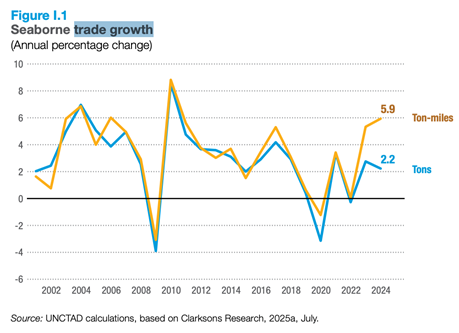
Figure 1: Growth of Global Maritime Trade
Key risk factors to monitor in 2026, according to the World Economic Outlook 2025, include: Geopolitical tensions and risks affecting shipping routes and global supply chains Uncertainty surrounding trade policies and protectionist measures Higher financing costs and tight financial conditions in some countries Volatility in energy and logistics costs Climate-related risks that may affect infrastructure and maritime transportation
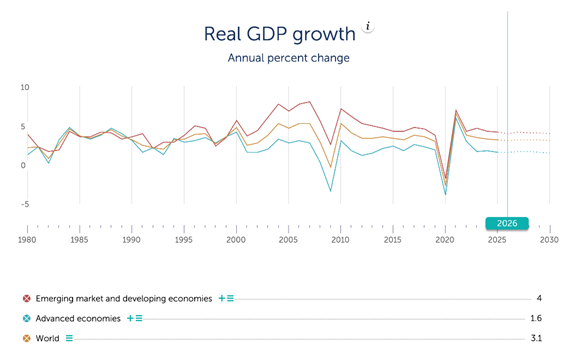
Sources : world economic outlook october 2025
Figure 2: Global Economic Growth Rate
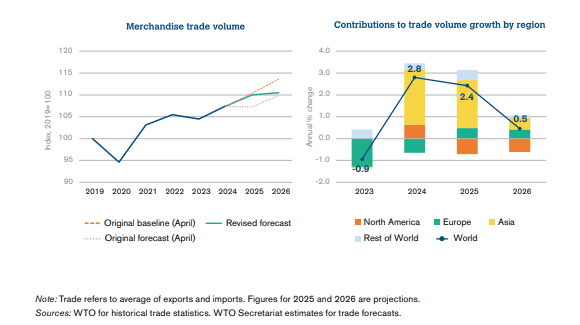
Figure 3: Global Trade Volume
2. Global Shipbuilding Industry Overview 2025
2.1 Market Situation (UNCTAD, Clarksons Research)
The global shipbuilding industry is experiencing growth amid high uncertainty driven by geopolitical changes and evolving trade policies. In particular, the transition toward reducing greenhouse gas emissions and changes in shipping routes resulting in longer routes have increased both transportation costs and delivery times.
Maritime transport remains the backbone of global trade, with more than 80% of global trade volume carried by sea. As a result, trends and developments in the shipbuilding industry have a direct impact on global trade activities.
2.2 Ship Deliveries (Clarksons Research, 2025)
According to monthly delivery statistics, approximately 202 vessels were delivered in September 2025, representing a total of more than 8.6 million deadweight tons (DWT). While the number of vessels delivered declined compared with the same period in the previous year, total DWT increased by approximately 5.5%, indicating a higher proportion of larger vessels being delivered.
For 2025 (January–September), total vessel deliveries amounted to 2,296 ships, representing approximately 73.25 million DWT. This level is broadly comparable to that of 2024 but shows a positive trend supported by the higher total DWT delivered.
2.3 New Orders (Clarksons Research, 2025)
According to the latest data from Clarksons, during the first nine months of 2025, approximately 1,424 new ship orders were placed, totaling around 81.73 million DWT. This represents a decline compared to 2024, when approximately 3,142 vessels totaling 157.7 million DWT were ordered, indicating a slowdown in global shipbuilding orders this year.
However, on a month-to-month basis, there are signs of partial recovery. In September, new ship orders totaled 150 vessels with a combined volume of more than 4.09 million CGT. This reflects a gradual recovery in demand and includes orders across various vessel segments such as bulk carriers, tankers, container ships, and offshore vessels.
2.4 Orderbook (Backlog) (Clarksons Research, 2025)
As of early October 2025, the global shipbuilding orderbook stood at approximately 6,222 vessels, equivalent to around 165.99 million CGT. China continues to hold the largest share, accounting for approximately 66% of the total number of vessels in the orderbook, followed by Japan at around 12% and South Korea at approximately 11%.
A high level of orderbook provides support for shipyard capacity utilization and future deliveries. However, it may also create pressure from potential oversupply of vessels if new orders are not aligned with the long-term growth trend of global trade demand.
2.5 Alternative Fuel Trends in New Ship Orders
According to the UNCTAD 2025 report, more than 50% of the tonnage in new ship orders consists of vessels designed to use alternative fuels, such as dual-fuel or other alternative fuel technologies. This trend reflects increasing pressure from environmental regulations and carbon reduction initiatives among shipowners and shipping companies.
2.6 Global Fleet Growth (UN Trade Data Hub)
In 2025, the global commercial fleet continued to expand, despite a slowdown in new ship orders. Total fleet capacity, measured in deadweight tonnage (DWT), increased by approximately 3.3% compared with the previous year, with total capacity rising by around 79 million DWT. This growth reflects the delivery of new vessels and the increasing size of ships delivered in recent years, which continues to support global maritime trade activities.
However, fleet growth that outpaces the growth of global trade may create pressure from potential overcapacity in certain vessel segments.
2.7 Fleet Age Profile (UNCTAD, Review of Maritime Transport 2025)
A significant number of vessels in the global fleet are over 15–20 years old, particularly in the bulk carrier and tanker segments. This may lead to an acceleration in vessel scrapping if the costs of upgrading these vessels to comply with environmental regulations become too high.
Conversely, the proportion of vessels utilizing alternative fuels and energy-efficient technologies is increasing, reflecting the structural transition of the maritime industry toward greater environmental sustainability and improved energy efficiency.
Summary of the Shipbuilding Market in 2025
Key Issue | Trend / Situation |
Deliveries | The number of vessels delivered declined slightly, while total DWT increased. |
New Orders | New shipbuilding orders slowed compared with the previous year. |
Orderbook | The global orderbook remains high, with China holding the largest share. |
Fuel Shift | More than 50% of the tonnage in new orders consists of vessels using alternative fuels. |
Megatrend | Rerouting and changes in shipping routes continue to increase uncertainty in the industry. |
Overall, the global shipbuilding market in 2025 appears to be entering a normalization phase following the surge in ship orders in previous years. Meanwhile, the orderbook remains at a high level, creating potential risks of overcapacity over the next 2–3 years, which will require close monitoring.
3. Global Competitive Structure (2025)
In 2025, competition in the global shipbuilding industry remains highly concentrated in Asia. China continues to be the dominant leader, accounting for approximately 56.1% of global new shipbuilding production and more than 66% of the global orderbook in 2025. South Korea ranks second, holding around 20% of new shipbuilding orders, with a competitive advantage in high-technology segments such as LNG carriers and specialized vessels. Meanwhile, Japan, a traditional competitor in the industry, maintains a market share of approximately 7–12%.
Country | Deliveries / New Orders (approx.) | Orderbook (approx.) |
China | ~56% | ~66% |
South Korea | ~28% | ~20% |
Japan | ~12% | ~12% |
Others (Vietnam / Europe / India) | <4% | <2% |
These figures represent an overall view based on indicators including deliveries, new orders, and orderbook averages for 2025, and may vary slightly depending on specific vessel segments (based on data from global shipbuilding industry ranking sources).
3.1 Competitive Environment and Global Industry Trends
Over the past decade, the maritime industry has undergone a significant transition from competing primarily on cost efficiency and freight rates to an industry increasingly shaped by carbon constraints. Environmental pressure is no longer merely an issue of corporate image or social responsibility; it has become a structural factor that directly influences competitive dynamics, investment decisions, and access to financing for shipping operators worldwide.
At the international level, the International Maritime Organization (IMO) plays a critical role in shaping this transition. In 2023, the IMO announced its revised greenhouse gas (GHG) reduction strategy, targeting net-zero emissions by or around 2050. The strategy also includes interim targets, such as significant reductions in carbon intensity by 2030 and 2040. Under this framework, carbon efficiency has emerged as a new key performance indicator for the maritime industry.
Tools already enforced by the IMO, such as the Energy Efficiency Existing Ship Index (EEXI) and the Carbon Intensity Indicator (CII), require operating vessels to meet minimum energy-efficiency standards and to be assessed annually based on their carbon-intensity performance. Vessels with poor ratings may need to reduce speed, upgrade equipment, or in some cases may no longer be economically viable to operate. This has led to a trend toward accelerated scrapping of older vessels (early scrapping) and has encouraged new shipbuilding orders for more energy-efficient vessels.
In addition to the global framework, regional regulations, particularly those implemented by the European Union, have significantly intensified these pressures. The European Commission expanded the EU Emissions Trading System (EU ETS) to the maritime sector starting in 2024, effectively placing a direct financial cost on carbon emissions. Ships calling at EU ports are required to purchase emission allowances based on their carbon emissions, with the requirements gradually increasing in the coming years.
At the same time, the FuelEU Maritime regulation, which came into force in 2025, requires a gradual reduction in the greenhouse gas intensity of energy used on board vessels. As a result, shipping operators must increasingly consider the adoption of alternative fuels, such as LNG, methanol, or ammonia.
The introduction of carbon pricing and fuel standards has structurally changed the operating cost structure of shipping companies. In the past, the primary costs were fuel and operational expenses. Today, “carbon cost” has emerged as a new component that must be actively managed. Shipping companies are now required to calculate the carbon cost per voyage, and in many cases, part of this cost is passed on to customers through environmental surcharges.
The impact extends beyond operating costs and has begun to reshape the market structure. Vessels with better carbon efficiency may command higher charter rates, while older vessels with lower CII ratings may face operational limitations on certain routes, particularly those with stricter environmental regulations. As a result, the market is gradually differentiating between “low-carbon vessels” and vessels with higher environmental risk.
Another important dimension is the impact on investment and financing. ESG principles and frameworks such as the Poseidon Principles are increasingly being adopted by financial institutions to assess whether ship financing portfolios are aligned with global carbon-reduction targets. Vessels that do not align with these targets may face greater difficulty in accessing financing or may incur higher financing costs. Conversely, vessels equipped with cleaner technologies may benefit from more favorable lending terms. This trend indicates that carbon considerations are no longer solely regulatory requirements but have become an investment filter within the industry.
However, this transition is accompanied by significant uncertainty, particularly regarding fuel pathway risks. It remains unclear which alternative fuel will ultimately become the dominant long-term standard. Investments in vessels designed for a specific fuel type could become risky if supporting infrastructure develops in a different direction. Due to this uncertainty, many companies have chosen to invest in dual-fuel vessels or ships designed to allow future fuel conversions.
Environmental pressure has therefore fundamentally reshaped the structure of the maritime industry. Competition is no longer determined solely by fleet size or commercial efficiency but increasingly depends on the ability to manage carbon performance, adapt to evolving regulations, and secure access to green financing. The industry is entering a new era in which carbon competitiveness is becoming as important as the ability to transport goods efficiently.
3.2 Impacts of Environmental Standards and International Regulations
The International Maritime Organization (IMO) has revised its Greenhouse Gas Reduction Strategy (Revised GHG Strategy 2023), setting a target to achieve net-zero emissions by 2050. The strategy also establishes interim targets to reduce emissions by at least 20% by 2030 and 70–80% by 2040, compared with the 2008 baseline.
Short-term measures such as the Energy Efficiency Existing Ship Index (EEXI) and the Carbon Intensity Indicator (CII) have already come into force. These regulations require vessels with low energy efficiency to undertake improvements or face operational restrictions (IMO, 2025).
The European Union has also incorporated the maritime sector into the EU Emissions Trading System (EU ETS) starting in 2024. The scheme covers 100% of voyages within the EU and 50% of voyages between EU ports and non-EU countries. As a result, shipping companies must bear additional carbon costs, which may be reflected in freight rates and operating expenses (European Commission, 2025).
Meanwhile, the IMO is still considering medium-term measures such as a Global Carbon Levy or a Fuel Standard, which remain under negotiation. If implemented, these mechanisms could significantly affect the cost structure of the maritime industry, particularly if a global carbon pricing mechanism is established.
Stricter environmental regulations are directly influencing the structure of vessel demand in the global market. Older vessels with lower energy efficiency may face accelerated scrapping, while demand for vessels using alternative fuels and energy-efficient technologies continues to increase.
For the shipbuilding and ship repair industry, these policy developments create both risks and opportunities. In particular, the retrofit and green conversion markets are expected to experience notable growth in the medium term.
4. Ship Repair Market in Thailand
Vessels in the 500–20,000 deadweight tonnage (DWT) range represent the core market segment of Thailand’s shipyard industry. This is primarily because the structure of Thailand’s merchant fleet consists largely of small- to medium-sized vessels. Industry analyses indicate that the Thai fleet has a relatively high proportion of smaller vessels, while ships larger than 20,000 DWT remain limited in number. As a result, the repair market for vessels in the 500–20,000 DWT range is relatively stable and structurally significant to the overall industry.
In 2025, the competitive landscape of this market segment can be characterized as highly competitive but supported by stable demand. The primary drivers of ship repair demand are not fleet expansion but rather periodic dry-docking requirements and maintenance activities aimed at extending vessel lifespan and improving fuel efficiency, particularly as vessels age.
4.1 Key Drivers Supporting Ship Repair Demand in 2025
A significant proportion of Thailand’s small-vessel fleet has been in operation for a relatively long period. As vessels age, maintenance costs tend to increase, and ships must undergo periodic repairs and inspections in accordance with the requirements of classification societies and relevant regulatory authorities.
Environmental regulations introduced by the International Maritime Organization (IMO), particularly the EEXI and CII measures that came into force in 2023, continue to have an ongoing impact. Shipowners are required to improve the energy efficiency of their vessels, which may involve engine adjustments, installation of energy-saving equipment, or hull modifications to reduce hydrodynamic resistance. As a result, repair activities are no longer limited to routine maintenance but increasingly incorporate elements of carbon efficiency improvement.
In addition, regulations and announcements issued by the Marine Department of Thailand regarding the inspection and maintenance of safety equipment such as lifeboats and life-saving appliances (e.g., Marine Department announcements in 2025) help ensure a consistent base of repair and inspection work that is mandated by law.
4.2 Demand in 2025: Investment and Vessel Replacement
In 2025, investment in and replacement of vessels continues, although demand is concentrated in three main segments:
Port and Logistics Support Vessels Thailand continues to promote port development, logistics infrastructure, and maritime commercial activities. This supports demand for port service vessels such as tugboats and workboats, as well as coastal vessels operating on certain routes. Demand in this segment is closely linked to investments in port infrastructure and maritime trade activities.
Passenger and Tourism Vessels The growth of marine tourism, marina development, and premium leisure boating has created demand for small- to medium-sized new vessels, particularly passenger ferries, tourist boats, and high-speed vessels. This segment typically emphasizes quality of construction, materials, design, and delivery timelines.
Specialized Vessels for Government and State Enterprises Shipbuilding and procurement orders from government agencies, state enterprises, and security-related organizations such as port support vessels and mission-specific vessels play an important role as a buffer source of demand. During periods when the commercial shipbuilding market slows, these government-related projects help sustain domestic shipbuilding activity in Thailand.
4.3 Competitive Challenges and Constraints in 2025
Production Scale and Supply Chain Constraints The scale of production and the supply chain for ship components remain key bottlenecks. New shipbuilding projects still rely significantly on imported machinery, systems, and equipment, which can lead to fluctuations in both costs and lead times, particularly for vessels with higher technical complexity.
Limitations in Skilled Labor and Marine Engineering Expertise The availability of skilled labor, including welders, assembly technicians, and specialists in marine piping and electrical systems, remains a critical factor influencing both construction quality and delivery timelines. These capabilities are central to the competitiveness of Thai shipyards. While Thai shipyards perform well in certain specialized vessel segments, these labor constraints can make it more difficult to expand into highly complex large-vessel construction.
Competition from Foreign Shipyards in Standard Commercial Vessels The market for standard commercial vessels is highly competitive and primarily driven by cost efficiency and large-scale production capacity. As a result, Thai shipyards must focus on segments where they have competitive advantages, such as specialized vessels, faster delivery times, and proximity to domestic or regional customers
4.4 Support and Drivers from the Private and Public Sectors
Private Sector: “Investment in Shipyard Capabilities + Collaboration with Vessel Operators and Ports + Development of Specialized Vessels” In 2025, practical signals from Thailand’s private sector indicate continued efforts to develop specialized vessels and to establish strategic partnerships with stakeholders within the maritime ecosystem, such as port operators and relevant agencies. These collaborations aim to generate domestic orders and showcase the capabilities of Thai shipyards within the broader maritime industry. From a competitive standpoint, private companies that hold an advantage are those capable of providing end-to-end services, including design, construction, testing, delivery, and after-sales services, while effectively managing the supply chain for key equipment and components.
Public Sector: “Policy Frameworks, Investment Incentives, and Workforce Development” Government support plays an important role through the establishment of policy frameworks, investment incentives, and workforce development programs, which help strengthen the long-term competitiveness and sustainability of the domestic shipbuilding and ship repair industry.
Policy Framework, Regulation, and Promotion of the Thai Shipyard and Fleet Industry
The Five-Year Government Action Plan (2023–2027) of the Marine Department outlines the mission to regulate and promote the development of the water transport and maritime sectors, including ports, shipyards, the Thai merchant fleet, and related industries. This framework serves as the foundation for regulatory facilitation and infrastructure development that supports the growth of the shipbuilding and ship repair industry.
Investment Incentives (Explicitly Covering Shipbuilding and Ship Repair)
The Board of Investment (BOI) provides investment promotion incentives for activities related to shipbuilding and ship repair. According to BOI guidelines, the promoted activities include “Building or Repair of Ships,” with separate conditions for ships of ≥500 gross tons and ships of <500 gross tons. These incentives are subject to certain requirements, such as obtaining ISO 14000 environmental management certification within a specified timeframe. Such incentives play an important role in encouraging investment in shipyard upgrades, technological improvements, and production process development.Public–Private Workforce Development There is ongoing cooperation between vocational education institutions and shipbuilding/ship repair industry associations to develop training programs and produce skilled labor aligned with industry needs. This collaboration aims to address the skilled labor bottleneck in the medium term and strengthen the long-term competitiveness of Thailand’s maritime industry.
5. Shipbuilding and Ship Repair Industry in Thailand in 2025
5.1 Overview of Thailand’s Maritime Transport Sector and Thai Fleet
Thailand plays an important role as a regional logistics and maritime trade hub, with the operations of the Thai merchant fleet and shipping businesses closely linked to the country’s international trade volumes and major port infrastructure. Data and analytical insights regarding Thailand’s maritime transport sector can be referenced from UNCTADstat, which provides a Thailand Maritime Profile for comparative analysis with other countries in the region.
5.2 Official Statistics of Thailand (Marine Department)
Official statistical data and reports related to Thailand’s shipping and water transport sector can be referenced from the statistical data section of the Marine Department, the principal authority responsible for the regulation of water transport and vessel registration in Thailand. These statistics serve as an important reference base for analyzing domestic trends and year-on-year comparisons within the maritime industry.
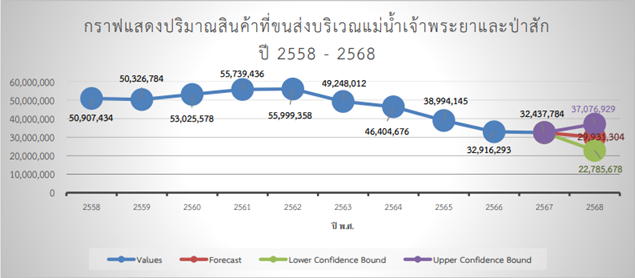
5.3 Situation of Major Ports and Cargo Throughput
Vessel traffic and cargo throughput at major ports reflect the level of trade and logistics activities associated with the maritime sector. The Port Authority of Thailand publishes annual statistics for Bangkok Port and Laem Chabang Port, which can be used to analyze demand trends for commercial vessels and supporting maritime services, as well as to assess the potential of the domestic ship repair industry.
5.4 Key Infrastructure: Laem Chabang Port Phase 3 and Its Impact on the Logistics System
Thailand is approaching a strategic turning point in logistics development with the Laem Chabang Port Phase 3 project, which has progressed to approximately 67% completion. The project will significantly enhance the port’s capability to accommodate large container vessels of up to 20,000 TEU, supported by one of the most advanced automated cargo-handling systems in ASEAN. Once completed, the port’s cargo handling capacity will increase from 11 million TEU to 18.1 million TEU per year. The project is also designed to integrate with double-track railway networks and smart road infrastructure, reducing transportation time to the Eastern Economic Corridor (EEC) to less than 24 hours, thereby strengthening Thailand’s geographical advantage within the global supply chain. This expansion has also attracted major global logistics operators such as Maersk and CMA CGM to establish operational bases in Thailand, reflecting confidence in the country’s potential as a regional transportation hub.
In terms of economic impact, the project is expected to create over 100,000 quality jobs in the EEC area, reduce agricultural export logistics costs by approximately 30%, and target a 30% reduction in carbon dioxide emissions by 2030 through the adoption of clean energy systems. Therefore, Laem Chabang Port Phase 3 is not merely an infrastructure project, but a key mechanism for driving Thailand’s economy toward sustainability while positioning the country as a future logistics leader in ASEAN.
5.5 Analytical Observations (Linking to the Thai Shipyard Industry)
In summary, domestic factors such as the structure of the Thai fleet, maritime sector statistics, and port infrastructure development provide an important foundation for assessing future demand for ship repair and supporting maritime services within the country. However, strengthening the competitiveness of Thailand’s ship repair industry will require alignment with international environmental standards and the global competitive structure, enabling Thai operators to define a clear strategic position for the period 2025–2027.
6. Structure and Capabilities of the Thai Shipyard Industry
6.1 Supply Structure of the Thai Shipyard Industry The Thai shipyard industry on the supply side primarily serves the ship repair market for vessels ranging from 500–20,000 DWT. Shipyards are geographically distributed across several areas, particularly along the Gulf of Thailand (Bangkok – Samut Prakan – Laem Chabang), where they benefit from well-developed infrastructure and proximity to major trade routes. In addition, shipyards along the Andaman coast mainly support tourism vessels and specialized small craft. In 2025, the key competitive factors in the industry are not driven by large-scale production capacity, but rather by:
Turnaround time for service delivery
Cost management capability and price control
Work quality and rework rate
Availability of specialized skilled labor
The shortage of skilled labor remains a structural challenge for the Thai shipbuilding and ship repair industry, affecting both service quality and project turnaround time.
The structure of Thailand’s shipyard industry differs from that of leading global shipbuilding countries. The industry primarily focuses on ship repair services and small- to medium-sized shipbuilding, as most domestic shipyards have been developed to efficiently accommodate vessels in these segments.
To enhance long-term competitiveness, the industry will need to accelerate the development and adoption of advanced technologies while expanding access to financing sources. This would enable shipyards to strengthen their capabilities and expand into higher-value shipbuilding projects.
Compared with other countries in the ASEAN region, Thailand continues to maintain advantages in terms of strategic location and expertise in ship repair services, which supports its competitiveness in the regional market.
6.2 SWOT Analysis of the Thai Shipyard Industry (Strategic Perspective)
Strengths Strategic Location
Expertise in Ship Repair (Repair-based Industry)
Competitive Labor Costs Compared with Singapore
Continuously Developing Port Infrastructure
| Weaknesses Limited Shipyard Capacity
Lack of Mass Production Capability
Limited Advanced Technology
Shortage of Specialized Skilled Labor
Limited Investment and Government Support
|
Opportunities Growing Market for Environmental Retrofit and Green Conversion
European Union Emissions Trading System (EU ETS)
Scrapping Wave from Aging Fleets
Regional Repair Hub Potential
Diversification Opportunities
| Threats China Dominates More Than 50% of the Market
Global Overcapacity Risk
Lower Costs in Vietnam
Global Economic Volatility
|
7. Industry Outlook for 2026
7.1 Outlook for 2026 Overall, the ship repair market in 2026 is expected to remain stable but with intensifying competition. Although routine maintenance demand will continue to provide a baseline level of work, cyclical fluctuations in the maritime transport sector may weaken shipping activity during certain periods. As a result, shipowners may exercise stricter cost control measures. Industry analyses of the maritime transport sector indicate that freight rates and shipping revenues may face downward pressure in 2026. Such conditions typically lead shipowners to delay non-urgent maintenance work and negotiate more aggressively on pricing. Nevertheless, regulatory drivers from the International Maritime Organization (IMO) on carbon reduction will continue to play an important role. Projects related to energy efficiency improvements and regulatory compliance cannot easily be postponed. As a result, the ship repair market in 2026 is expected to be divided into two main categories:
Mandatory or statutory repairs, which remain relatively stable due to regulatory requirements; and
Preventive maintenance or optional upgrades, which may face stronger price competition and potential postponement.
The Thai ship repair market for vessels in the 500–20,000 DWT segment demonstrated relatively stable demand in 2025, supported by the large number of small vessels in operation and increasing environmental regulatory pressure that drives energy-efficiency upgrades.
Looking ahead to 2026, competition is expected to intensify in terms of pricing and operational efficiency, reflecting pressure from shipping market cycles. However, the market will continue to receive support from IMO regulations and ongoing safety compliance requirements.
In summary, the market is gradually shifting from competition based primarily on price and yard availability toward competition driven by quality, turnaround time, and the ability to meet environmental standards. These factors are expected to become key determinants of competitiveness for Thai shipyards in the years ahead.
7.2 Outlook for the New Shipbuilding Market in 2026 Demand Direction: “Commercial Shipowners Becoming More Cautious, While Specialized Vessels Continue to Grow” The global maritime transport industry is expected to experience softer revenue trends during 2026–2027, mainly due to declining freight rates and the possibility of reduced seaborne trade volumes in 2026. An indirect impact on the new shipbuilding market is that commercial shipowners are likely to exercise greater caution in managing capital expenditures (CAPEX), particularly by delaying orders for standard commercial vessels. However, shipbuilding activities in Thailand, which are largely focused on specialized vessels, support vessels, tourism vessels, and mission-specific vessels, are expected to demonstrate greater resilience compared with the mainstream commercial shipbuilding segment. A key megatrend that is expected to become increasingly evident in 2026 is the growing pressure from environmental regulations and industry standards. These factors are likely to shift demand toward energy-efficient and low-emission vessels. This trend is particularly relevant for nearshore service vessels, passenger vessels, and tourism vessels, where the adoption of emerging technologies such as hybrid propulsion systems and electric power solutions is relatively more feasible. Importance of Delivery Time and Reliability In a volatile market environment, customers are expected to place greater emphasis on on-time delivery and product reliability. Ensuring that vessels are delivered as scheduled and perform according to operational requirements will be critical for supporting customers’ business plans.
Overall Summary
Amid intensifying competition and increasing environmental pressures, the Thai shipbuilding and ship repair industry should prioritize strategies that focus on the ship repair and vessel upgrade markets, particularly those related to environmental compliance and energy efficiency improvements. At the same time, the industry should continue to develop technological capabilities and enhance production standards in order to strengthen its regional competitiveness. This approach would allow Thai shipyards to avoid direct competition in large-scale shipbuilding with countries that possess significant advantages in terms of scale and capital.
In 2025, the global economy continued to expand at a moderate pace, while global trade is expected to slow in the following year. Geopolitical uncertainties and evolving trade policies remain key risk factors. Maritime transport, which serves as the backbone of global trade, continues to face pressure from rising costs and the need to adjust shipping routes in response to geopolitical developments.
The global shipbuilding industry still maintains a relatively high orderbook, although new orders have begun to slow. The global fleet expanded by approximately 3.3%, while the age structure of vessels reflects increasing trends in ship scrapping and vessel upgrades, driven in part by environmental regulations such as the IMO GHG Strategy and the European Union Emissions Trading System (EU ETS).
Global industry competition remains highly concentrated, with China accounting for more than half of global shipbuilding production, followed by South Korea and Japan.
For Thailand, the shipyard industry remains primarily focused on ship repair services, with certain limitations in scale and advanced technology compared with leading shipbuilding nations. Nevertheless, the growing demand for vessel retrofitting and the transition toward a low-carbon economy presents significant opportunities to enhance the competitiveness of the Thai shipyard industry over the next three to five years.
Procurement of Products & Services
Reporting Mode
3117
Procurement (Overall)
The nature of the procurement of products for sale
Production
Currently, the company has 2 floating docks, 5,000 DWT and 20,000 DWT.
The process of ship repair, shipbuilding and the total production capacity of the company can be summarized as follows:
Ship repair
Production process
1.Bringing the ship up for repairs on the floating dock.
2.Repair according to customer requirements.
• Steel and welding work
• Surface preparation and paint spraying
• Anchor chain and anchor work
• Piping work
• Wood and plaster work
3. Mechanical work
• Machinery work
• Propeller shaft and rudder work
• Electrical system work
• Various valve work
Production capacity
With a total production capacity of 80 ships/ year (2 floating docks, 20,000 DWT and 5,000 DWT) 100% Capacity
Hypothesis: large ships 4,000 – 20,000 DWT
The company can repair ships of various sizes and several ships at the same time.
Shipbuilding
Production process
1. Ship design
2. Expansion of ship lines
3. Assembling the hull and parts of the hull
4. Installation of machinery and various system works, namely electricity and pipes, etc.
5. Launching ships into the water
6. Installation and finishing remaining work in the water
7. Inspection of various systems and ship test
Production capacity
With a total production capacity of 3 ships/ year
Hypothesis: Ships of 7,000-10,000 DWT or a maximum length of 100 meters
Seasonal effects on business operations
The nature of the company's operations during the rainy season may cause some obstacles in ship repair and shipbuilding, which may delay the project. However, the company has already planned and scheduled the operating schedule during the said period. The rainy season, therefore has no significant impact on operations.
Important equipment
1. The two floating docks with the capacity of 5,000 DWT to 20,000 DWT are as follows;
• Floating Dock: Asimar 1, Dimension: 98 x 19.6 m, Lifting capacity: 2,000 t. Maximum Vessel: 5,000 DWT
• Floating Dock: Asimar 2, Dimension: 161 x 28 m. Lifting capacity: 6,000 t. Maximum Vessel: 20,000 DWT, Crane: 2 x 12 t. 2 x Dock-knight
2. Head Office The shipyard has two separate slipways with 20,000 square meters and Suratthani branch has a separate slipways with 37,000 square meters area for production.
3. Several equipment such as large cranes and indoor workshop are available to assist repairing works effectively.
• 2 sets of CNC (Computer Numerical Control) Cutting Machine
• 1 set of 100-ton Gantry Cranes
• 3 sets of 10-ton Gantry Cranes
• Construction of a grit blasting chamber for steel plates, 2.4 m wide, 10 m long, 1 chamber
• Mobile crane (Dock knight) in Floating Dock 2 for painting and sandblasting, 1 set
• 6 units of 5-ton Gantry Cranes for logistics of steel parts in the assembly plant
• 2 sets of Hydro Blast
• 1 unit of 15-ton Tower Crane
• 1 set of CNC (Computer Numerical Control) Cutting Aluminum
The above equipment is generally used for the following services:
Hull work
• Cleaning
- Sandblasting / Grit blasting
- High pressure water jet (800 bar)
- Tank and oil cleaning
- Anchor and chain cleaning
- Painting and Coating
Mechanical work/ Electrical work
• Main / Auxiliary engine repair
• Boiler / Condenser repair
• Propeller
• Propulsion shaft
• Pipe Fitting
• Electrical and electronics
Non-destructive testing
• Non-destructive testing (NDT)
- Ultrasonic gauging
- Magnetic particle test
- Radiographic test
- Dye penetration test
- Cargo gear load test (up to 350 t.)
4. Head Office The total working area is approximately 33,280 square meters with 300 meters waterfront and 9 meters water depth at the jetty and Suratthani branch has the working area is approximately 38,352 square meters with 87 meters waterfront.
Factors affecting business opportunities or limitations
Location
The company's location is at the mouth of the Chao Phraya River. There is a shipyard area of over 20 rai with a berth at a depth of 9 meters in front of the dock, which is sufficient for the repair of several large ships at the same time, suitable for running a shipyard business.
Bonded warehouse
The company has been approved to establish a bonded warehouse from the Customs Department. This allows the company to benefit from import duty on raw materials with exemption from import duty on materials and equipment for use in ship repair and shipbuilding for marine vessels with a size of more than 15 gross tons. In 2005, the company has been granted a permanent renewal of the contract.
International Maritime Organization (IMO)
It is the organization which sets standards and guidelines for safety in navigation and protection of the marine environment, contributing to fleet owners to improve or modify ship conditions to meet the specified standards.
The development of the Thai fleet
Due to the fact that, most of the Thai fleet has old ships that are very old, this caused the need to repair or modify the ships to meet IMO standards, including the need for new shipbuilding to replace the old ships.
Water transportation
At present, the government sector has a policy to support water transportation from water infrastructure development projects. There is an increased demand for ships to transport goods, which is an opportunity for the company to undertake ship repair work and build more ships.
Environment
The environment is an important and vigilant issue with strict rules and procedures, and new regulations must be monitored at all times.
Government policy
At present, the government sector has a clear policy to support the reduction of logistic costs. The water transportation is most cost-effective, There is a policy which is in the process of making an operational plan separated by the relevant parties in each aspect.
Technology
The company has researched innovations by introducing technology to improve the work to be modern, reduce energy consumption and care for the environment.
Raw Material Acquisition (Overall)
Raw materials and raw material suppliers (Supplier)
The types of materials used in ship repair and shipbuilding are different. most of the shipbuilding material sources are ordered from foreign countries, such as Germany, the Netherlands, the United States, Finland, Japan, China, Singapore, etc. as for the raw materials for ship repairs are ordered locally. In 2025, the proportion of raw materials purchased domestically was 89% and from abroad was 11%, with approximately 423 suppliers. In 2024, 54% of raw materials were purchased domestically and 46% from abroad, respectively.
Production Policy (Overall)
The company is committed to enhancing its business capabilities by increasing operational efficiency and effectiveness to meet the needs and build confidence among customers with quality work in terms of work standards, price, and delivery time by
1. Analyze the organizational context and determine appropriate business directions.
2. Assess organizational risks and establish measures to mitigate them.
3. Develop personnel at all levels.
4. Continuously develop ship repair, shipbuilding, and operational processes.
5. Coordinate and monitor customer satisfaction regularly.
6. Coordinate and address customer complaints promptly.
7. Control and evaluate subcontractors to obtain qualified subcontractors and ensure the efficiency and effectiveness of operations.
8. Control, monitor, review, and evaluate quality objectives by conducting internal audits, tracking customer feedback, and monitoring performance reports.
9. Continuous development and improvement process.
Distributors (Overall)
In the past 3 years, the company has not relied on any one raw material suppliers for more than 30% of total revenue. Most shipbuilding raw materials, if they are materials that do not require a Class Certificate, can be purchased locally, except for the parts that require a Class Certificate that need to be imported from abroad, such as large machines, electric machines, etc. The details of the types and sources of key raw materials are as follows:
Raw materials for ship repair: Most of the raw materials can be ordered locally, such as steel, various types of pipes, air, gas, welding rods, valves, etc.
Raw materials for shipbuilding: Types of raw materials purchased from abroad, such as ship-building quality steel (Ship Plate),Main Engine, Generator, Crane, Wire and valves.
Major ship repair projects: Machinery and equipment installed in ships such as generator marine engine and there are orders from many suppliers depending on Specification that is required for equipment purchased in the country, including communication equipment. marine equipment electrical appliance Air conditioners and welding equipment
Number of Raw-Material Distributors (Overall)
423
Production Capacity (Overall)
| Item | Unit | Unit (if Other) | Used | Capacity |
|---|---|---|---|---|
| Ship repair | Others | vessel | 83.75 | 80 |
| Shipbuilding | Others | vessel | 66.67 | 3 |
Domestic/Overseas Purchase Proportion (Overall)
| Raw Material | Source Country | Value |
|---|---|---|
| Generator set | Germany | 9,972,548,000 |
| Main Engine | United Kingdom | 35,079,765 |
| Azimuth Thruster | Finland | 26,473,351 |
| Ship Plate Steel, Marine Paint and Navigation & Communication | Thailand | 22,680,899 |
| Anchor Winch, Capstan and Anchor | China | 5,230,741 |
| Marine Lighting | Singapore | 5,020,174 |
| Marine Cable | Finland | 4,471,493 |
| Fire Fighting System | South Korea | 4,112,603 |
Nature of Business — Overview
Introduction
Business overview of the Company and Affiliates major businesses
Asian Marine Services Public Company Limited
Core business of ASIMAR is in shipbuilding, ship repair and engineering works. The Company is the only leading shipyard listed on the Stock Exchange of Thailand with major shareholders being Tanpaibul Group (SEATRAN) and Panitvong Group together. The Company’s productivity in ship repair is about 80 vessels per year, and shipbuilding 7,000 – 10,000 DWT around 2 vessels per year. The Company also founded a number of subsidiaries to provide high-skilled services for specific applications, e.g. Future Power Solutions Co., Ltd., Asimar Marine Co., Ltd. and Eco marine Co., Ltd.
The company is currently certified with ISO 9001 quality standards covering both new shipbuilding and ship repair. It has received ISO 45001 Occupational Health and Safety accreditation and ISO 14001 Environmental Management Certification and the Company has obtained ISO 14064-1 certification for Greenhouse Gas Quantification and Reporting, reflecting its commitment to accurate measurement, verification, and transparent reporting of greenhouse gas emissions. Currently, the company has 2 floating docks, which can accommodate ships from 5,000 DWT to 20,000 DWT respectively, with a focus on Repair of medium-sized boats or customers who want high quality and on time delivery The Company has an estimated production capacity of ship repairs of 80 ships/year and shipbuilding of 7,000-10,000 DWT 3 ships/year. In addition, the Company can also construct other engineering works such as steel structures within airport terminal corridors. Suvarnabhumi construction of oil rigs, etc.
The company has expanded a branch in Surat Thani province. to support ship repair, shipbuilding, and various steel structure engineering works in the south and neighboring regions.
Future Power Solutions Company Limited
The Company is a sole shareholder in Future Power Solutions Co., Ltd.,Conducting business as a distributor of machinery, machinery, generators spare parts and related equipment both inside and outside the country.
Asimar Marine Company Limited
The Company is a sole shareholder in Asimar Marine Co., Ltd. conducts business as ship repair contractor to the Company due to growing demand of the workforce in the market. The Company has great intention to develop highly skilled workforce to meet the standards set forth by Ship Classification Society.
Ecomarine Company Limited
Ecomarine Co., Ltd. is a joint venture between ASIMAR and ITALMARE S.P.A.(last name GLOBELCO S.p.A.)from Italy with the shareholding structure of 93.15% and 6.85% respectively. ECOMARINE is a builder of vessels and renders services in the field of water antipollution e.g. debris collection, oil spill recovery, algae and weed harvesting for both private and public sectors.
Moreover, ITALMARE S.P.A. has been continuously supporting Ecomarine Co., Ltd. in terms of both technology transfer and patented ship plans to further develop the industry as well.
Projects Under Construction
Has Projects Under Construction (Y/N)
Yes
Description
Under-construction projects (as of 31 December 2025)
Ship repair amount 7.58 million baht
Shipbuilding amount 277.39 million baht
Other amount 3.33 million baht
Total Projects
12
Total Project Value
1150.01
Recognized Value
863.65
Remaining / Unrecognized Value
288.3
Projects
| Project Name | Description | Value | Income % | Est. Years | Est. Months | Est. Completion |
|---|---|---|---|---|---|---|
| the Project Hydrographic survey & Buoy Tender | 34 | 95.8 | 2 | 1 | 2026-02-01 | |
| Sattahip Commercial Ports tugboat | 243 | 13.4 | 1 | 5 | 2026-12-01 | |
| Ship repair for 7 vessel | Revenue recognition for the project: Average 61.75% (range 39.40%–92.23%) from 7 vessels. | 7 | 61.75 | 0 | 7 | 2026-02-01 |
| 1 Overhaul Projects | 0 | 0.49 | 0 | 6 | 2026-03-01 | |
| Pier Construction Project | 0 | 85.81 | 0 | 8 | 2026-03-01 | |
| Ship Air Conditioner Procurement Project | 1 | 0 | 0 | 7 | 2026-07-01 |
Debentures & Bills of Exchange
Has Debentures (Y/N)
No
Convertible Securities
Has Convertible Securities (Y/N)
No